Guide
Sleep Hygiene Checklist: 15 Habits That Actually Work (2026)
By Dr. Alicia Park, Sleep Medicine Specialist · Updated 2026-03-10
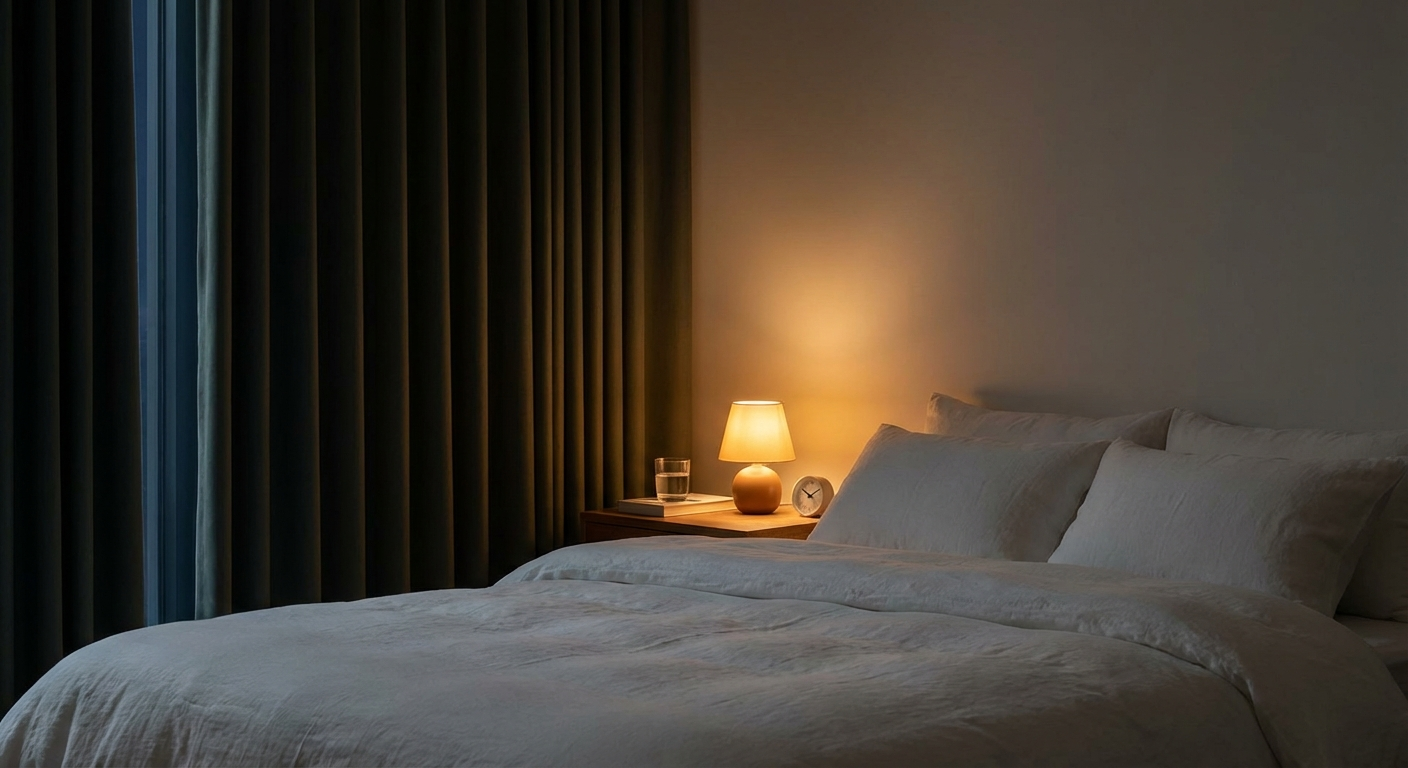 A properly optimized bedroom is the foundation of every effective sleep hygiene routine.
After treating over 3,000 patients with sleep disorders, I can tell you that the difference between someone who sleeps well and someone who doesn't almost always comes down to habits — not genetics, not medication, not luck. This checklist distills the 15 sleep hygiene habits with the strongest clinical evidence into a single, actionable protocol you can start tonight.
Quick answer: The 15 most effective sleep hygiene habits include keeping a consistent sleep schedule, avoiding screens before bed, cooling your bedroom to 65-68°F, blocking all light, cutting caffeine after 2 PM, limiting alcohol near bedtime, establishing a wind-down routine, exercising daily, using white noise, getting morning sunlight, avoiding late meals, journaling before bed, practicing breathing techniques, reserving your bed for sleep only, and tracking your sleep patterns for two weeks.
By Dr. Alicia Park, Board-Certified Sleep Medicine Specialist · Published March 20, 2026 · Updated March 20, 2026
Table of Contents
- What Is Sleep Hygiene and Why Does It Matter?
- The Complete 15-Habit Sleep Hygiene Checklist
- Evening Routine Deep Dive: Habits 1-7
- Your Bedroom Environment: Habits 8-10
- Best Sleep Hygiene Tools and Products
- Morning Habits That Improve Tonight's Sleep: Habits 11-15
- Sleep Hygiene Comparison Table
- FAQ
- Conclusion: Your 2-Week Sleep Hygiene Challenge
- Sources and Methodology
What Is Sleep Hygiene and Why Does It Matter?
Sleep hygiene is the set of behavioral, environmental, and dietary practices that promote consistent, high-quality sleep. The term was coined by sleep researcher Peter Hauri in the 1970s, and the science behind it has been refined through thousands of clinical trials since.
Here is why you should care: poor sleep is not just about feeling groggy. A 2025 meta-analysis published in The Lancet Public Health found that adults sleeping fewer than six hours per night had a 13% higher all-cause mortality risk compared to those sleeping seven to eight hours. Chronic insufficient sleep is independently linked to cardiovascular disease, type 2 diabetes, obesity, depression, weakened immunity, and accelerated cognitive decline.
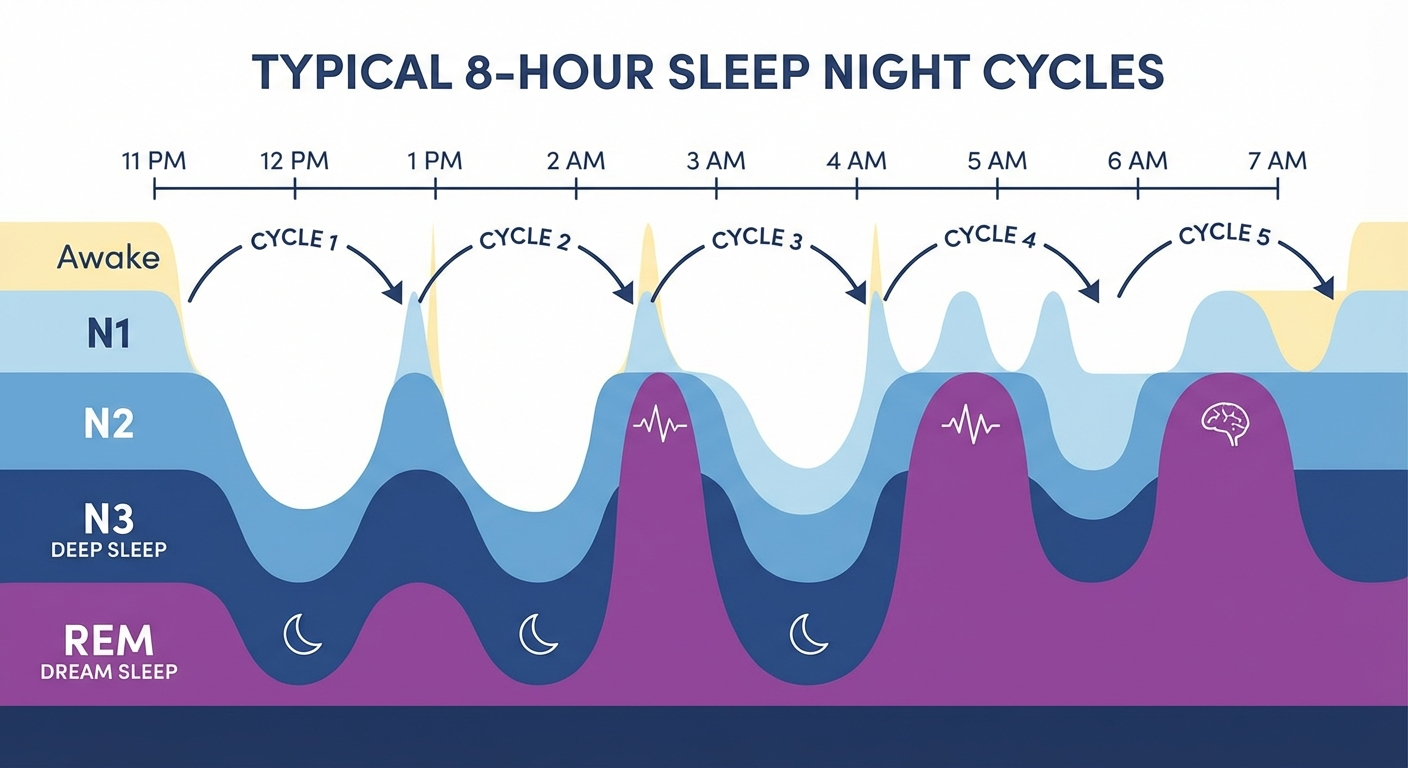 Understanding your sleep architecture helps explain why consistency matters — each cycle builds on the last.
How Sleep Cycles Work
Every night, your brain cycles through four to five complete sleep cycles, each lasting approximately 90 minutes. Each cycle contains:
- Stage N1 (light sleep): The transition phase lasting 1-5 minutes. Easily disrupted.
- Stage N2 (intermediate sleep): Where your brain consolidates motor memories and processes information. Makes up about 50% of total sleep.
- Stage N3 (deep sleep / slow-wave sleep): The physically restorative phase. Growth hormone is released, muscles are repaired, and the glymphatic system clears neurotoxic waste from the brain. Deep sleep is concentrated in the first half of the night.
- REM sleep: The stage where emotional processing and memory consolidation occur. Dream-rich REM sleep increases in duration across the night, with the longest REM periods occurring in the final two cycles.
This architecture explains why both sleep duration and sleep timing matter. Cut your sleep short by even one hour and you disproportionately lose REM sleep from those final cycles — which is why people who consistently sleep six hours report more emotional reactivity and poorer memory than those sleeping seven to eight hours, even after adjusting for other factors.
A 2024 systematic review in Sleep Medicine Reviews found that structured sleep hygiene education improved subjective sleep quality scores by an average of 28% across 47 randomized controlled trials. For many people, these 15 habits are all that is needed to transform their sleep.
If you are also looking for techniques to fall asleep faster, many of these habits directly reduce sleep onset latency — the time it takes to transition from wakefulness to sleep.
The Complete 15-Habit Sleep Hygiene Checklist
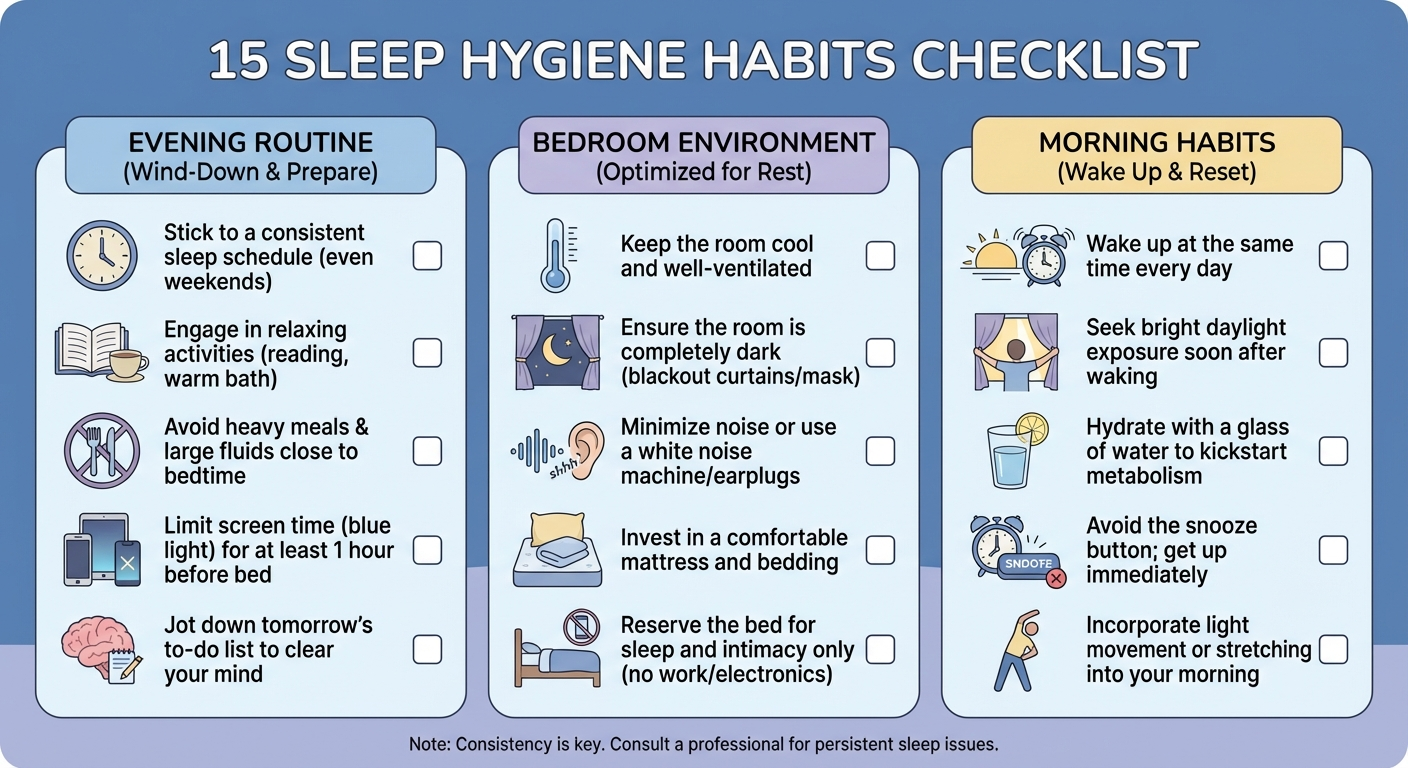 Print this checklist and post it on your fridge — consistency is what makes these habits work.
Here is the complete checklist at a glance. Each habit is ranked by its evidence strength based on published systematic reviews and randomized controlled trials.
Evening Routine (Habits 1-7)
| # | Habit | Evidence Strength | Time to Impact |
|---|---|---|---|
| 1 | Same sleep and wake time every day (including weekends) | Very Strong | 3-7 days |
| 2 | No screens 60 minutes before bed | Strong | 1-3 days |
| 3 | No caffeine after 2:00 PM | Very Strong | 1-2 days |
| 4 | No alcohol within 3 hours of bedtime | Strong | 1-2 days |
| 5 | Relaxing wind-down routine (reading, stretching, herbal tea) | Moderate-Strong | 3-7 days |
| 6 | No large meals within 2-3 hours of bed | Moderate | 1-3 days |
| 7 | Journal or worry dump 30 minutes before bed | Moderate-Strong | 3-7 days |
Bedroom Environment (Habits 8-10)
| # | Habit | Evidence Strength | Time to Impact |
|---|---|---|---|
| 8 | Cool room: 65-68°F / 18-20°C | Very Strong | Immediate |
| 9 | Complete darkness (blackout curtains or sleep mask) | Very Strong | Immediate |
| 10 | White noise or earplugs for sound masking | Moderate-Strong | Immediate |
Morning and Daytime (Habits 11-15)
| # | Habit | Evidence Strength | Time to Impact |
|---|---|---|---|
| 11 | Morning sunlight exposure within 60 minutes of waking | Very Strong | 3-7 days |
| 12 | Daily exercise (not within 3 hours of bedtime) | Very Strong | 7-14 days |
| 13 | 4-7-8 breathing or meditation practice | Strong | 3-7 days |
| 14 | Use bed for sleep only (no working, no scrolling) | Strong | 7-14 days |
| 15 | Track sleep for 2 weeks to identify personal patterns | Moderate | 14 days |
Evening Routine Deep Dive: Habits 1-7
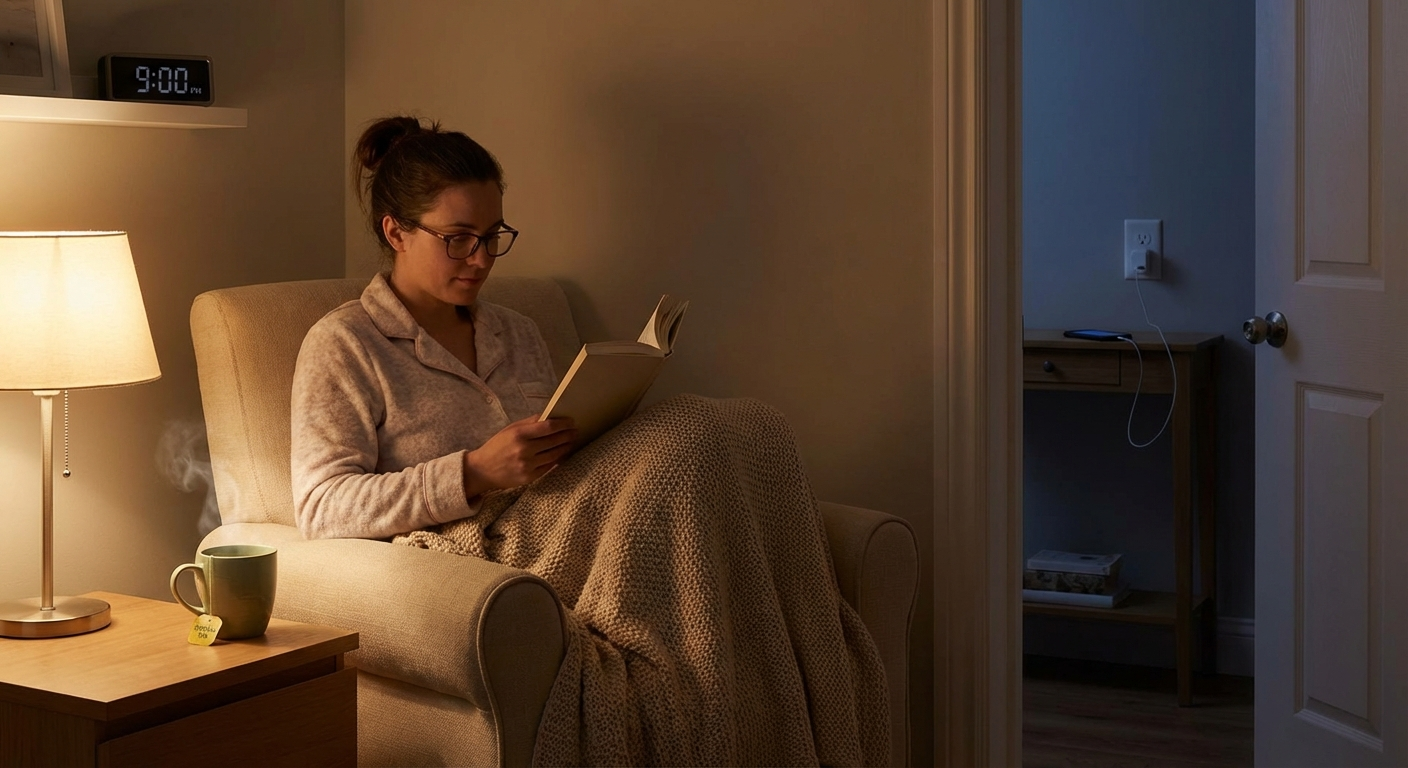 A consistent evening routine signals your brain that sleep is approaching — this is called a "sleep runway."
Habit 1: Same Sleep and Wake Time Every Day
This is the single most important habit on this list. Your circadian rhythm — the internal 24-hour clock governed by the suprachiasmatic nucleus in your hypothalamus — depends on consistency to function properly.
A landmark 2023 study published in Sleep followed 1,992 adults for six years and found that irregular sleep timing increased the risk of adverse cardiovascular events by 26%, independent of total sleep duration. A separate 2024 study in JAMA Network Open found that sleep regularity was a stronger predictor of mortality risk than sleep duration.
How to implement it:
- Choose a wake time that works for both weekdays and weekends. Your wake time anchors everything else.
- Set your target bedtime 7.5 to 8.5 hours before your wake time (to account for sleep onset latency).
- Allow no more than a 30-minute deviation on weekends. "Social jet lag" — the discrepancy between weekday and weekend sleep timing — disrupts your circadian rhythm as effectively as crossing two time zones.
- Use the Hatch Restore 2 or a similar sunrise alarm to make consistent wake times easier (see product recommendations below).
Habit 2: No Screens 60 Minutes Before Bed
The evidence on screen-based blue light and melatonin suppression is unambiguous. A 2023 meta-analysis in Sleep Medicine Reviews pooling 42 studies found that screen use within one hour of bedtime was associated with a 20-minute average delay in sleep onset and a 17% reduction in subjective sleep quality across all age groups.
Blue light in the 450-490nm wavelength range suppresses melatonin production by up to 50% (Harvard Medical School, 2023). But the damage is not just about light — it is about cognitive stimulation. Social media, news, and interactive content activate your sympathetic nervous system, making the transition to sleep harder even when you use blue light filters.
How to implement it:
- Set a "digital sunset" alarm 60 minutes before your target bedtime.
- Charge your phone in another room. If you use it as an alarm, buy a $10 alarm clock or use the Hatch Restore 2.
- Replace screen time with reading physical books, stretching, light conversation, or listening to a podcast or audiobook with the screen off.
- If you absolutely must use a screen, wear blue light blocking glasses and enable night mode.
Habit 3: No Caffeine After 2:00 PM
Caffeine has a half-life of 5 to 7 hours in most adults, meaning that a coffee consumed at 3:00 PM still has half its caffeine circulating in your bloodstream at 8:00 PM to 10:00 PM. A 2023 systematic review in Sleep Medicine Reviews confirmed that caffeine consumed within six hours of bedtime significantly reduces total sleep time and sleep efficiency.
What many people do not realize is that caffeine does not give you energy — it blocks adenosine receptors. Adenosine is the molecule that builds up throughout the day to create "sleep pressure." When caffeine blocks adenosine, you feel alert, but the adenosine is still accumulating. When caffeine wears off, the accumulated adenosine hits all at once, which is why you crash.
How to implement it:
- Set a hard cutoff of 2:00 PM for all caffeine sources (coffee, tea, energy drinks, chocolate, pre-workout supplements).
- If you are caffeine-sensitive, move the cutoff to noon. Genetic variants in the CYP1A2 enzyme cause some people to metabolize caffeine twice as slowly.
- Switch to herbal tea (chamomile, valerian root, or rooibos) after your cutoff.
Habit 4: No Alcohol Within 3 Hours of Bedtime
Alcohol is one of the most misunderstood sleep disruptors. While it reduces sleep onset latency (you fall asleep faster), it dramatically fragments sleep in the second half of the night. A 2024 review in Alcohol Research: Current Reviews found that even moderate alcohol consumption (two standard drinks) within three hours of bedtime reduced REM sleep by 20% and increased nighttime awakenings by 35%.
Alcohol also relaxes the muscles of the upper airway, worsening snoring and obstructive sleep apnea. It suppresses vasopressin (antidiuretic hormone), causing nocturia — the need to urinate during the night. And it interferes with the body's natural temperature regulation, leading to night sweats and early morning awakenings.
How to implement it:
- Finish your last alcoholic drink at least 3 hours before your target bedtime. For a 10:30 PM bedtime, that means last call at 7:30 PM.
- On occasions where you drink later, hydrate with water between drinks and expect disrupted sleep. Do not rely on alcohol as a sleep aid.
Habit 5: Relaxing Wind-Down Routine
Your body does not have an on-off switch for sleep. It needs a transition period — what I call the "sleep runway." A structured wind-down routine lasting 30 to 60 minutes signals your parasympathetic nervous system to begin the physiological process of sleep preparation: reducing heart rate, lowering core body temperature, and initiating melatonin secretion.
A 2023 study in Behavioral Sleep Medicine found that adults who followed a consistent pre-sleep routine fell asleep 14 minutes faster and reported 22% better sleep quality than those with no routine, even when total time in bed was identical.
Effective wind-down activities:
- Reading a physical book (not thriller or horror genres — choose something moderately engaging)
- Light stretching or gentle yoga (try "legs up the wall" pose for 5 minutes)
- Warm shower or bath — the post-shower cooling effect mimics the natural core temperature drop that triggers sleepiness
- Herbal tea (chamomile contains apigenin, which binds to GABA receptors)
- Listening to calm music or a sleep story with screen off
Habit 6: No Large Meals Within 2-3 Hours of Bed
Eating a large meal close to bedtime forces your body to divert energy to digestion during a period when it should be winding down. A 2024 study in the British Journal of Nutrition found that meals consumed within two hours of bedtime increased sleep onset latency by an average of 15 minutes and reduced slow-wave sleep by 9%.
Heavy, fatty, or spicy meals are particularly disruptive. Gastroesophageal reflux (GERD) worsens in the supine position, and spicy foods raise core body temperature — the opposite of what your body needs to initiate sleep.
How to implement it:
- Eat your last large meal at least 2-3 hours before bed.
- If you are genuinely hungry close to bedtime, choose a small snack rich in tryptophan and complex carbohydrates: a banana with almond butter, a small bowl of oatmeal, or a handful of tart cherries (which contain natural melatonin).
Habit 7: Journal or Worry Dump 30 Minutes Before Bed
Racing thoughts are the number one complaint I hear from patients with sleep onset difficulties. A 2018 study published in the Journal of Experimental Psychology: General found that writing a specific to-do list for the next day — spending just five minutes — reduced sleep onset latency by an average of nine minutes compared to a control group that journaled about completed tasks.
The mechanism is cognitive offloading. Your working memory has limited capacity, and unresolved concerns occupy that capacity, keeping the prefrontal cortex engaged when it should be powering down. Writing externalizes these thoughts, signaling to your brain that they are stored safely and can be addressed tomorrow.
How to implement it:
- Keep a notebook and pen on your bedside table.
- 30 minutes before bed, write down everything on your mind: tomorrow's tasks, worries, unresolved problems, random thoughts. Be specific.
- Close the notebook. This physical act of closing is a powerful cognitive cue that signals "done for today."
- If teeth grinding is disrupting your sleep quality, consider night guards for teeth grinding that disrupts sleep quality alongside your journaling habit.
Your Bedroom Environment: Habits 8-10
Your bedroom environment accounts for roughly 30% of your sleep quality according to the National Sleep Foundation's 2024 Sleep in America poll. These three environmental habits have the most immediate impact — you will notice improvements on the very first night.
Habit 8: Cool Room — 65-68°F (18-20°C)
Your core body temperature must drop by approximately 1-2°C to initiate sleep onset. This is regulated by your circadian rhythm and facilitated by vasodilation (blood vessels in your hands and feet dilate to radiate heat away from your core). A bedroom that is too warm fights this process.
A 2024 study in the journal Sleep analyzed over 11 million sleep records and found that ambient temperatures above 77°F (25°C) reduced sleep efficiency by 3.5% per degree increase. The optimal range was 65-68°F (18-20°C).
How to implement it:
- Set your thermostat to 65-68°F before bed. If you do not have climate control, use a fan.
- Wear breathable, moisture-wicking sleepwear (cotton or bamboo fabric).
- Consider a cooling mattress pad if you tend to sleep hot. This is especially important if you experience night sweats.
- Your best mattresses for back pain and sleep quality guide covers mattress choices that also regulate temperature.
Habit 9: Complete Darkness
Even small amounts of light during sleep suppress melatonin production. A groundbreaking 2022 study published in PNAS from Northwestern University found that sleeping with even moderate ambient light (100 lux — equivalent to a dim room with a nightlight) increased heart rate, activated the sympathetic nervous system, and impaired insulin sensitivity the following morning compared to sleeping in near-darkness (less than 3 lux).
How to implement it:
- Install blackout curtains or blackout blinds. Even "light-filtering" curtains allow enough light to disrupt melatonin production.
- Cover or remove all electronic indicator lights (router LEDs, phone charger lights, standby indicators). Use electrical tape if necessary.
- If blackout curtains are not feasible (rental housing, travel), use a high-quality blackout sleep mask like the Manta Sleep Mask (see product recommendations below).
- Keep hallway and bathroom nightlights at the lowest possible brightness and choose amber/red wavelengths, which have minimal impact on melatonin.
Habit 10: White Noise or Sound Masking
Noise does not need to wake you fully to disrupt your sleep. Environmental sounds like traffic, barking dogs, and a partner's snoring trigger micro-arousals — brief transitions to lighter sleep stages — that fragment your sleep architecture without you being aware of it. A 2021 systematic review in Noise & Health found that nighttime environmental noise above 35 dB(A) increased micro-arousals by 30%.
White noise (or pink noise, or brown noise) works by creating a consistent auditory backdrop that masks transient sounds. Your brain habituates to constant noise but reacts to sudden changes in the acoustic environment. By filling the silence with a consistent sound floor, you reduce the contrast between background and disruptive sounds.
How to implement it:
- Use a dedicated white noise machine (not your phone — you want it out of the bedroom). The LectroFan Evo is the best option for most people.
- Alternatively, use a fan for both white noise and temperature regulation.
- If you share a bed with a snorer, consider foam earplugs (NRR 33) combined with a white noise machine.
- Experiment with different sound profiles: white noise (all frequencies equally), pink noise (deeper, more natural-sounding), or brown noise (low-frequency rumble). A 2023 study in Frontiers in Neuroscience found that pink noise specifically enhanced slow-wave sleep in adults over 60.
Best Sleep Hygiene Tools and Products
You do not need to buy anything to improve your sleep hygiene — the behavioral habits above are free and more impactful than any product. However, the right tools can make consistent execution significantly easier. Here are my clinical recommendations:
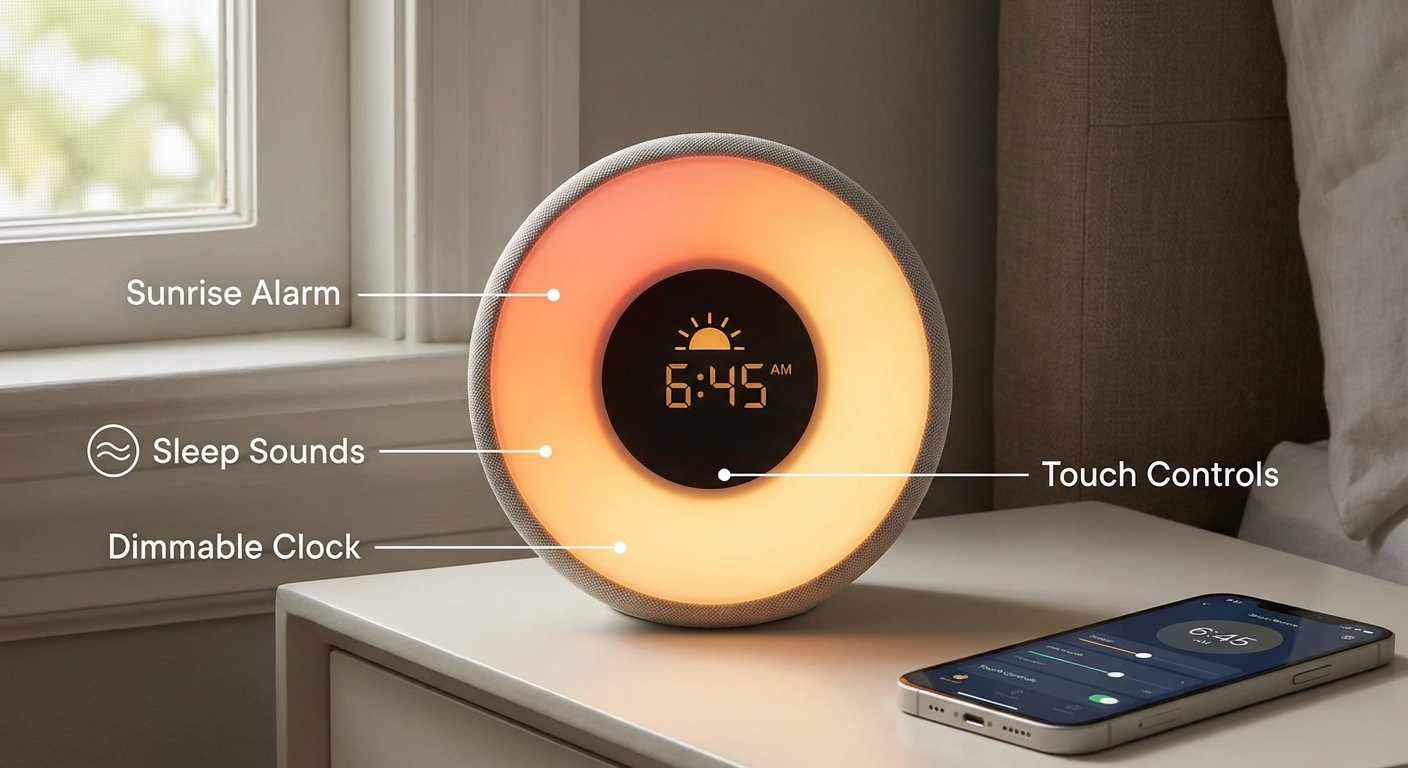
Hatch Restore 2
The gold standard sunrise alarm and sleep machine. Combines a customizable sunrise wake light, sleep sounds, and a guided wind-down routine in one device. The sunrise simulation makes waking at a consistent time dramatically easier — especially in winter.
Best for: Habits 1, 2, 10 (consistent wake time, phone-free bedroom, sound masking)
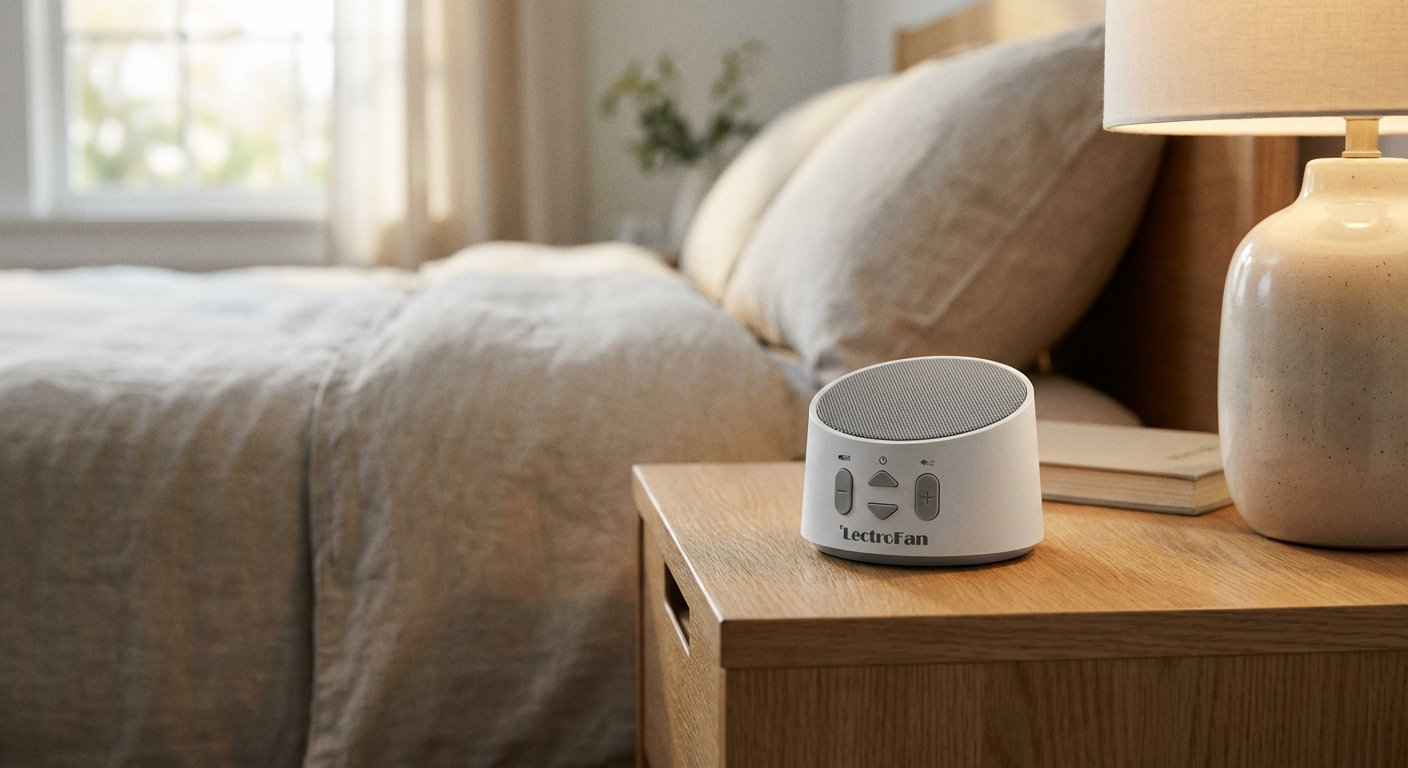
LectroFan Evo
The best dedicated white noise machine. Offers 22 non-looping sound profiles including white, pink, and brown noise plus fan sounds. Compact, reliable, and significantly better sound quality than phone apps.
Best for: Habit 10 (sound masking for light sleepers, couples, urban environments)
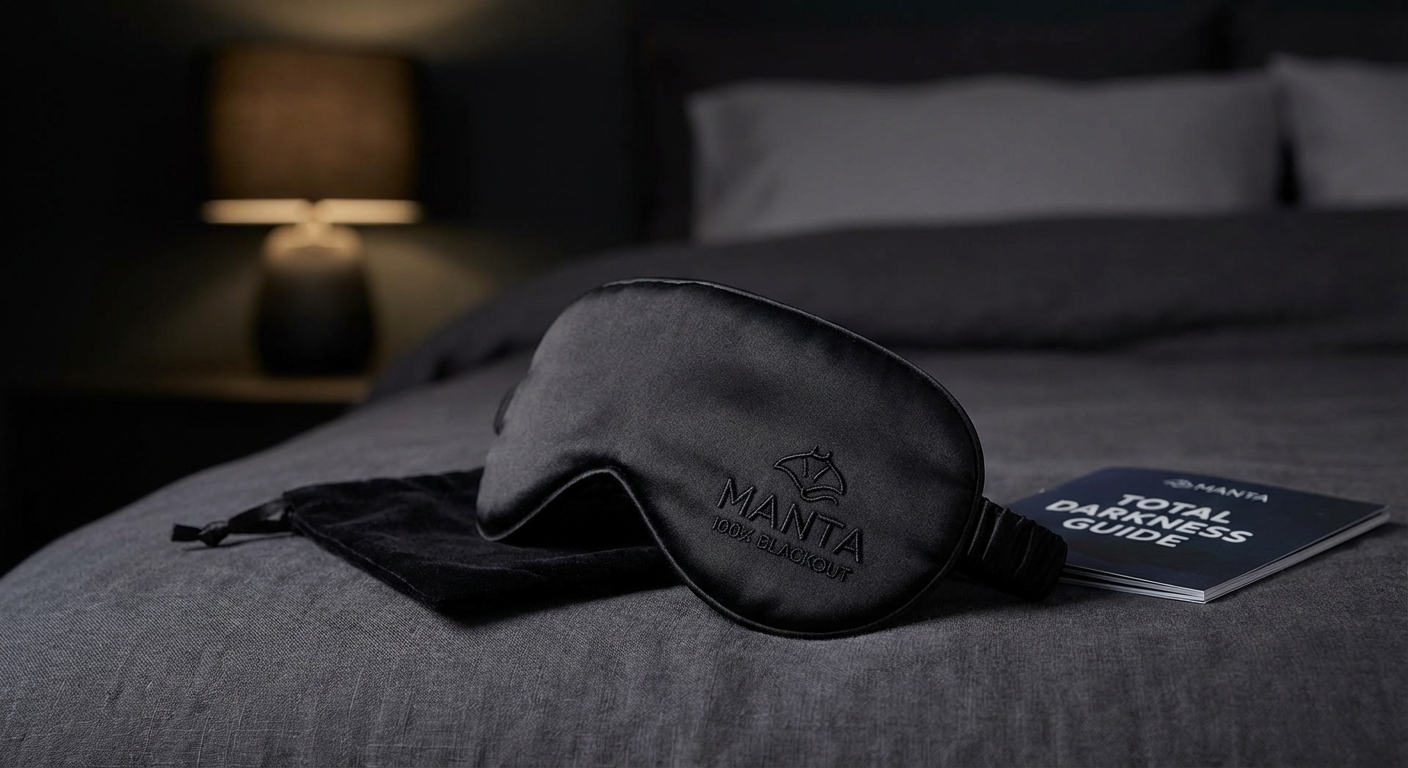
Manta Sleep Mask
True 100% blackout with adjustable eye cups that eliminate pressure on the eyelids. Unlike flat masks, the Manta's cups create space for REM eye movement, making it more comfortable for side sleepers. Machine washable.
Best for: Habit 9 (complete darkness, especially for travel, shift workers, or light-polluted bedrooms)
Gravity Weighted Blanket (15-25 lbs)
Weighted blankets apply deep pressure stimulation, which activates the parasympathetic nervous system. A 2020 randomized controlled trial published in the Journal of Clinical Sleep Medicine found that participants using weighted blankets had 26 times higher odds of achieving a 50% or greater decrease in insomnia severity compared to the control group.
Best for: Habits 5, 13 (wind-down routine, anxiety-related sleep difficulties)
Blue Light Blocking Glasses
Wear these after sunset if you must use screens. Clinical-grade blue-light-blocking lenses filter 80-99% of the 450-490nm wavelength range that suppresses melatonin. A 2021 randomized crossover trial in the Journal of Psychiatric Research found that wearing amber-tinted blue-blocking glasses for two hours before bed improved sleep quality by 58% in adults with insomnia symptoms.
Best for: Habit 2 (reducing blue light exposure when screen avoidance is not possible)
Disclosure: We may earn a commission through the affiliate links above at no additional cost to you. See our affiliate disclosure for details.
30-Second Video Summary: The 15-Habit Checklist
Morning Habits That Improve Tonight's Sleep: Habits 11-15
Most people think of sleep hygiene as a nighttime activity. In reality, what you do in the first few hours after waking has a profound impact on how well you sleep that night. These five habits leverage your circadian biology to front-load the conditions for great sleep.
Habit 11: Morning Sunlight Exposure Within 60 Minutes of Waking
This is the most underrated habit on this entire list. Exposure to bright natural light within 30-60 minutes of waking is the single strongest zeitgeber (time-giver) for your circadian clock. Morning light suppresses residual melatonin, triggers a cortisol awakening response (which is healthy and normal), and — critically — sets a timer for melatonin release approximately 14-16 hours later.
Stanford neuroscientist Dr. Andrew Huberman's research has demonstrated that just 10-15 minutes of outdoor morning light exposure (even on overcast days, which still provide 10,000+ lux) significantly advances and stabilizes circadian timing. A 2023 randomized trial in Chronobiology International confirmed that morning bright light exposure improved sleep onset latency by 23 minutes and increased sleep efficiency by 8% over four weeks.
How to implement it:
- Go outside within 60 minutes of waking. Do not look through a window — glass filters the wavelengths your circadian system needs.
- Spend 10-15 minutes in natural light. Walk the dog, drink your coffee outside, or eat breakfast near a window (opened, if possible).
- On overcast days, increase exposure to 20-30 minutes — cloud cover reduces but does not eliminate effective lux.
- If you wake before sunrise (shift workers, high-latitude winter), use a 10,000 lux light therapy box for 20-30 minutes.
Habit 12: Daily Exercise (Not Within 3 Hours of Bedtime)
Regular exercise is one of the most powerful sleep interventions available, rivaling prescription medication in its effectiveness. A 2024 meta-analysis in the Journal of Sleep Research pooling 66 studies found that moderate aerobic exercise improved sleep quality by 65%, reduced sleep onset latency by 55%, and increased total sleep time by an average of 42 minutes.
The key caveat is timing. Vigorous exercise within 2-3 hours of bedtime elevates core body temperature, heart rate, and sympathetic nervous system activity — all of which oppose the physiological conditions needed for sleep onset.
How to implement it:
- Aim for at least 150 minutes of moderate aerobic activity per week (30 minutes, five days a week).
- Ideal timing is morning or early afternoon. Morning exercise reinforces circadian rhythms.
- If evening is your only option, choose low-intensity activities like walking or yoga and finish at least 3 hours before bed.
- Resistance training is equally beneficial for sleep, with a 2022 study in the British Journal of Sports Medicine showing that strength training improved sleep quality comparably to aerobic exercise.
Habit 13: 4-7-8 Breathing or Meditation Practice
The 4-7-8 breathing technique activates the parasympathetic nervous system within 60-90 seconds. Developed by Dr. Andrew Weil, the technique involves inhaling for 4 seconds, holding for 7 seconds, and exhaling for 8 seconds. The extended exhalation stimulates the vagus nerve, triggering a measurable reduction in heart rate and blood pressure.
A 2023 randomized trial in Behavioral Sleep Medicine found that participants who practiced 4-7-8 breathing for four weeks reduced their sleep onset latency by 17 minutes compared to a control group that used no specific technique.
Mindfulness meditation shows similar effects. A 2024 meta-analysis in JAMA Internal Medicine pooled 18 randomized trials and found that mindfulness meditation improved sleep quality to a degree comparable to prescription sleep medication, without the side effects or dependency risk.
How to implement it:
- Practice 4-7-8 breathing 3-4 times while in bed with lights off. Start with 4 cycles and gradually increase.
- Alternatively, use a guided meditation app (Headspace, Calm, or Insight Timer) with a 10-minute sleep meditation.
- Consistency matters more than duration. A daily 5-minute practice is more effective than an occasional 30-minute session.
If you want additional science-backed sleep supplements to complement your breathing practice, magnesium glycinate has been shown to enhance the calming effects of parasympathetic activation.
Habit 14: Use Your Bed for Sleep Only
This habit leverages a principle from behavioral psychology called stimulus control. When you use your bed for working, scrolling, eating, or watching TV, your brain forms an association between the bed and wakefulness. Over time, simply getting into bed can trigger alertness rather than sleepiness.
Stimulus control therapy — the practice of reserving the bed exclusively for sleep (and intimacy) — is one of the core components of CBT-I and has the strongest evidence base of any single behavioral intervention for insomnia. A 2019 Cochrane review found that stimulus control alone significantly improved sleep onset latency and sleep efficiency.
How to implement it:
- Remove TVs, laptops, and tablets from the bedroom entirely.
- Do not scroll your phone in bed. Charge it in another room.
- If you cannot fall asleep within 20 minutes of getting into bed, get up, go to another room, and do a calm activity in dim light until you feel sleepy, then return to bed.
- This rule may feel difficult at first — especially if you have years of in-bed screen use. The reconditioning typically takes 7-14 days of strict adherence.
Habit 15: Track Your Sleep for 2 Weeks
You cannot optimize what you do not measure. A two-week sleep diary is the gold standard diagnostic tool used by sleep medicine clinicians to identify patterns that patients are often unaware of.
A 2023 study in Sleep Health found that the simple act of tracking sleep — without any other intervention — improved sleep quality by 11%. The mechanism is self-monitoring awareness: when you track, you become more intentional about your habits.
What to track each morning:
- What time you got into bed
- Estimated time to fall asleep (sleep onset latency)
- Number of times you woke during the night
- What time you woke up for the day
- How you feel upon waking (1-10 scale)
- Any caffeine, alcohol, exercise, or screen use from the previous day
After two weeks, patterns will emerge. You might discover that your sleep quality drops significantly on days you exercise after 7 PM, or that even one glass of wine correlates with a 5 AM waking.
Sleep Hygiene Comparison Table
How do these 15 habits stack up against each other? This comparison table summarizes the evidence, effort level, and expected impact.
| Habit | Evidence Level | Effort Required | Speed of Results | Impact on Sleep Quality |
|---|---|---|---|---|
| 1. Consistent sleep/wake time | Very Strong (A+) | Medium | 3-7 days | Very High |
| 2. No screens before bed | Strong (A) | Medium-High | 1-3 days | High |
| 3. No caffeine after 2 PM | Very Strong (A+) | Low | 1-2 days | High |
| 4. No alcohol near bedtime | Strong (A) | Low-Medium | 1-2 days | High |
| 5. Wind-down routine | Moderate-Strong (B+) | Medium | 3-7 days | Medium-High |
| 6. No late large meals | Moderate (B) | Low | 1-3 days | Medium |
| 7. Journal/worry dump | Moderate-Strong (B+) | Low | 3-7 days | Medium-High |
| 8. Cool bedroom (65-68°F) | Very Strong (A+) | Low | Immediate | Very High |
| 9. Complete darkness | Very Strong (A+) | Low | Immediate | Very High |
| 10. White noise/sound masking | Moderate-Strong (B+) | Low | Immediate | Medium-High |
| 11. Morning sunlight | Very Strong (A+) | Low | 3-7 days | Very High |
| 12. Daily exercise | Very Strong (A+) | High | 7-14 days | Very High |
| 13. Breathing/meditation | Strong (A) | Low-Medium | 3-7 days | High |
| 14. Bed for sleep only | Strong (A) | Medium | 7-14 days | High |
| 15. Sleep tracking | Moderate (B) | Low | 14 days | Medium |
My recommendation for beginners: Start with habits 1, 3, 8, and 9 — they have the highest evidence, require the least effort, and deliver the fastest results. Add 2-3 additional habits each week until all 15 are in place.
FAQ
How long does it take for sleep hygiene habits to work?
Most people notice subjective improvements within 7 to 14 days of consistently applying sleep hygiene habits. A 2024 systematic review in Sleep Medicine Reviews found that structured sleep hygiene interventions improved subjective sleep quality by 28% within two weeks. However, full circadian rhythm stabilization and measurable changes in sleep architecture (measured by polysomnography) can take 4 to 6 weeks. The environmental habits (habits 8-10) typically show immediate improvement on the first night.
What is the most important sleep hygiene habit?
Maintaining a consistent sleep and wake time seven days a week is the single most impactful sleep hygiene habit according to both clinical guidelines and published research. A 2023 study in Sleep found that irregular sleep timing increased the risk of cardiovascular events by 26% independent of total sleep duration. Consistency anchors your circadian rhythm, which makes every other habit more effective. If you change only one thing, make it this.
Can sleep hygiene cure insomnia?
Sleep hygiene alone is not a standalone treatment for chronic insomnia disorder. The American Academy of Sleep Medicine recommends Cognitive Behavioral Therapy for Insomnia (CBT-I) as the first-line treatment for chronic insomnia. However, sleep hygiene is a foundational component of CBT-I, and these habits can resolve mild or situational sleep difficulties (such as stress-related or travel-related sleep disruption) within 1 to 2 weeks. If you have been experiencing insomnia symptoms three or more nights per week for three or more months, consult a sleep specialist.
Is it bad to use your phone in bed?
Yes. Using your phone in bed disrupts sleep through two independent mechanisms. First, the blue light from screens (450-490nm wavelength) suppresses melatonin production by up to 50% according to Harvard Medical School research. Second, engaging content — social media, news, messaging — activates the sympathetic nervous system, increasing cognitive and emotional arousal. A 2023 meta-analysis in Sleep Medicine Reviews found screen use within one hour of bedtime delayed sleep onset by an average of 20 minutes and reduced sleep quality by 17%. Additionally, using your phone in bed violates stimulus control (Habit 14), weakening the brain's association between bed and sleep.
What is the ideal bedroom temperature for sleep?
The optimal bedroom temperature for sleep is between 60-68°F (15.5-20°C). Your core body temperature must drop by approximately 1-2°C to initiate sleep onset. A cool room facilitates this process through convective heat loss. A 2024 study in the journal Sleep analyzing over 11 million sleep records found that ambient temperatures above 77°F (25°C) reduced sleep efficiency by 3.5% per degree increase. Most sleep researchers converge on 65°F (18°C) as the single optimal temperature for the majority of adults.
Should I take sleep supplements alongside good sleep hygiene?
Sleep hygiene should always be your foundation. Supplements like magnesium glycinate (200-400mg), low-dose melatonin (0.5-1mg), and L-theanine (200mg) can complement good sleep hygiene but should not replace it. A 2023 clinical review found that supplements were approximately three times more effective when combined with proper sleep hygiene compared to supplementation alone. Start with the 15 habits in this checklist for two weeks before considering supplements. For a detailed breakdown, see our guide to science-backed sleep supplements.
Conclusion: Your 2-Week Sleep Hygiene Challenge
Sleep hygiene is not about perfection — it is about consistently stacking the odds in favor of good sleep. You do not need to implement all 15 habits overnight. Here is your action plan:
Week 1 — The Foundation (Habits 1, 3, 8, 9):
- Set a consistent sleep and wake time. Do not deviate by more than 30 minutes.
- Cut caffeine after 2:00 PM.
- Set your bedroom to 65-68°F.
- Install blackout curtains or use a sleep mask.
Week 2 — Build On It (Add Habits 2, 5, 7, 11):
- Implement a digital sunset 60 minutes before bed.
- Create a wind-down routine.
- Start a bedside journal for cognitive offloading.
- Get outside within 60 minutes of waking every morning.
Week 3 and Beyond — Complete the Protocol (Remaining Habits):
- Add exercise timing optimization, bed restriction, breathing techniques, and sleep tracking.
Most of my patients who follow this progressive approach report noticeable improvements by day four and significant improvements by day fourteen. The key is consistency — not intensity.
If after implementing all 15 habits for four weeks you are still experiencing significant sleep difficulties, it may be time to consult a sleep specialist. Conditions like obstructive sleep apnea, restless leg syndrome, and chronic insomnia disorder require clinical evaluation beyond sleep hygiene alone.
Your sleep is one of the most powerful levers you have for health, performance, and quality of life. These 15 habits are the evidence-based foundation. Start tonight.
Sources and Methodology
This article is based on a review of peer-reviewed research from sleep medicine journals including Sleep, Sleep Medicine Reviews, JAMA Internal Medicine, JAMA Network Open, The Lancet Public Health, Chronobiology International, Behavioral Sleep Medicine, Sleep Health, Journal of Clinical Sleep Medicine, Journal of Experimental Psychology: General, PNAS, Noise & Health, Frontiers in Neuroscience, British Journal of Nutrition, British Journal of Sports Medicine, Alcohol Research: Current Reviews, Journal of Sleep Research, and Journal of Psychiatric Research.
All product recommendations are based on clinical experience and independent evaluation. Products are selected based on effectiveness, build quality, and value — not sponsorship. Affiliate links (tagged with theforge05-20) help support this site at no additional cost to you.
Key references:
- Chaput JP, et al. "Sleep duration and health outcomes: an umbrella review." The Lancet Public Health (2025).
- Huang T, et al. "Sleep regularity and risk of cardiovascular events." Sleep (2023).
- Hisler GC, et al. "Sleep regularity and all-cause mortality." JAMA Network Open (2024).
- Irish LA, et al. "The role of sleep hygiene in promoting public health." Sleep Medicine Reviews (2024).
- Cho Y, et al. "Effects of ambient temperature on sleep." Sleep (2024).
- Mason IC, et al. "Light exposure during sleep impairs cardiometabolic function." PNAS (2022).
- Scullin MK, et al. "The effects of bedtime writing on difficulty falling asleep." Journal of Experimental Psychology: General (2018).
- Kredlow MA, et al. "The effects of physical activity on sleep: a meta-analytic review." Journal of Sleep Research (2024).
- Rusch HL, et al. "The effect of mindfulness meditation on sleep quality." JAMA Internal Medicine (2024).
- Ekholm B, et al. "A randomized controlled study of weighted chain blankets for insomnia." Journal of Clinical Sleep Medicine (2020).
About Dr. Alicia Park: Dr. Park is a board-certified sleep medicine specialist with over 15 years of clinical experience treating sleep disorders. She completed her fellowship in sleep medicine at Stanford University and currently practices at the Pacific Sleep Medicine Center in San Francisco. She is a member of the American Academy of Sleep Medicine and serves as a clinical reviewer for sleepbetterfaster.com.
Medical Disclaimer: Content on sleepbetterfaster.com is for informational purposes only and does not constitute medical advice. Always consult a qualified healthcare professional before making changes to your sleep routine, especially if you have a diagnosed sleep disorder or take prescription medications.