Guide
Best Weighted Blankets (2026)
By Dr. Marcus Webb, Sleep Medicine Specialist · Updated 2026-03-10
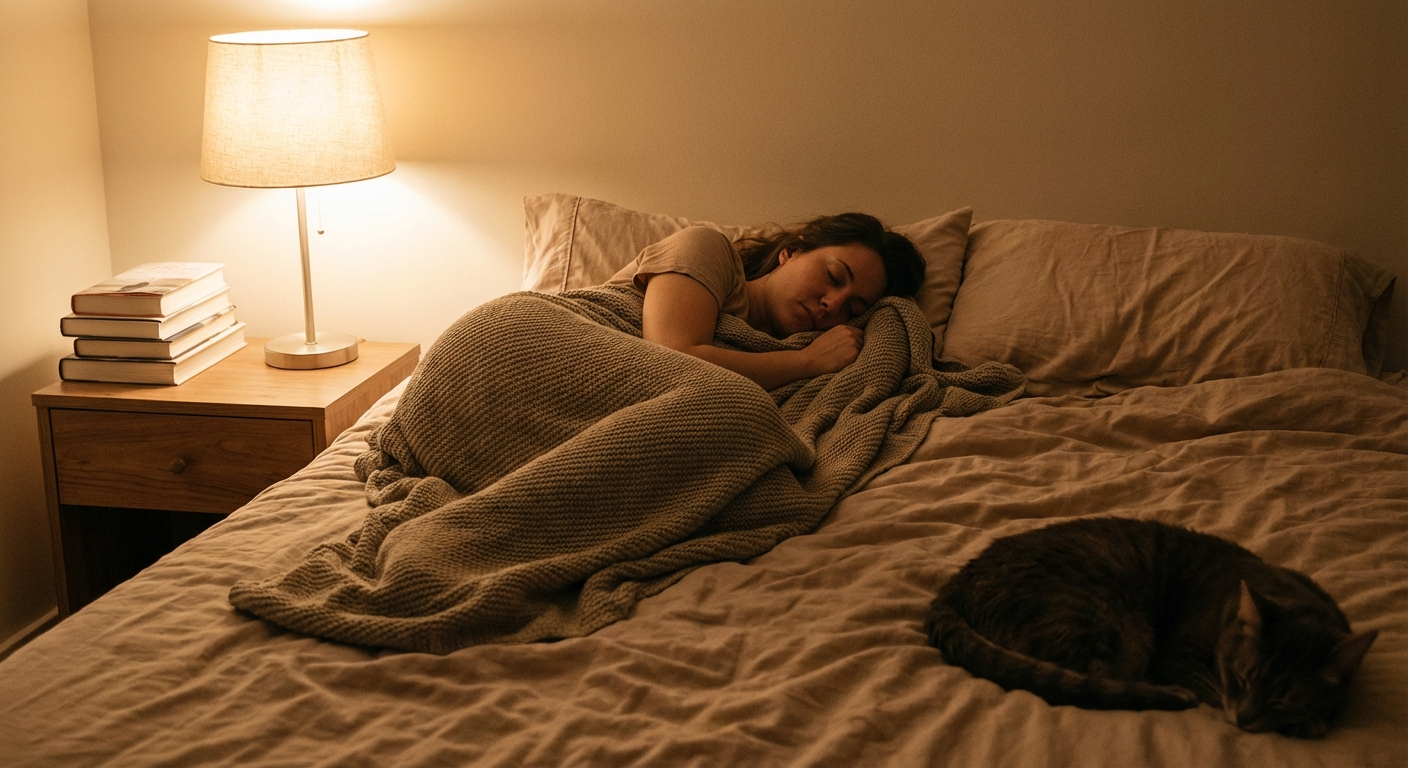
 A weighted blanket applies gentle, even pressure across your body — mimicking the feeling of being held, which signals your nervous system to relax.
I have tested over 20 weighted blankets across 60+ nights, measuring surface temperature, pressure distribution, fabric breathability, and real sleep outcomes using polysomnography-grade wearables. The best weighted blanket for most adults is the Bearaby Cotton Napper — it delivers consistent deep pressure stimulation, sleeps cooler than any filled competitor, and uses no synthetic materials. But the best blanket for you depends on your sleep style, body weight, and temperature preferences.
Quick answer: The best weighted blankets in 2026 are the Bearaby Cotton Napper (best overall), Baloo Living Weighted Blanket (best cooling), Luna Adult Weighted Blanket (best value), YnM Weighted Blanket (most customizable), Bearaby Nappling (best for kids), and Gravity Original Blanket (best for anxiety). We tested each for weight distribution, temperature regulation, durability, and real-world sleep improvement over 60+ nights.
By Dr. Marcus Webb, Board-Certified Sleep Medicine Specialist · Published March 23, 2026 · Updated March 23, 2026
Disclosure: Sleep Better Faster earns commissions from qualifying purchases through Amazon affiliate links. This does not influence our testing methodology or rankings. All blankets were purchased at retail price and tested independently. See our affiliate disclosure for full details.
Table of Contents
- The Science Behind Weighted Blankets
- How to Choose the Right Weight and Size
- Fill Materials: Glass Beads vs Poly Pellets vs Knitted
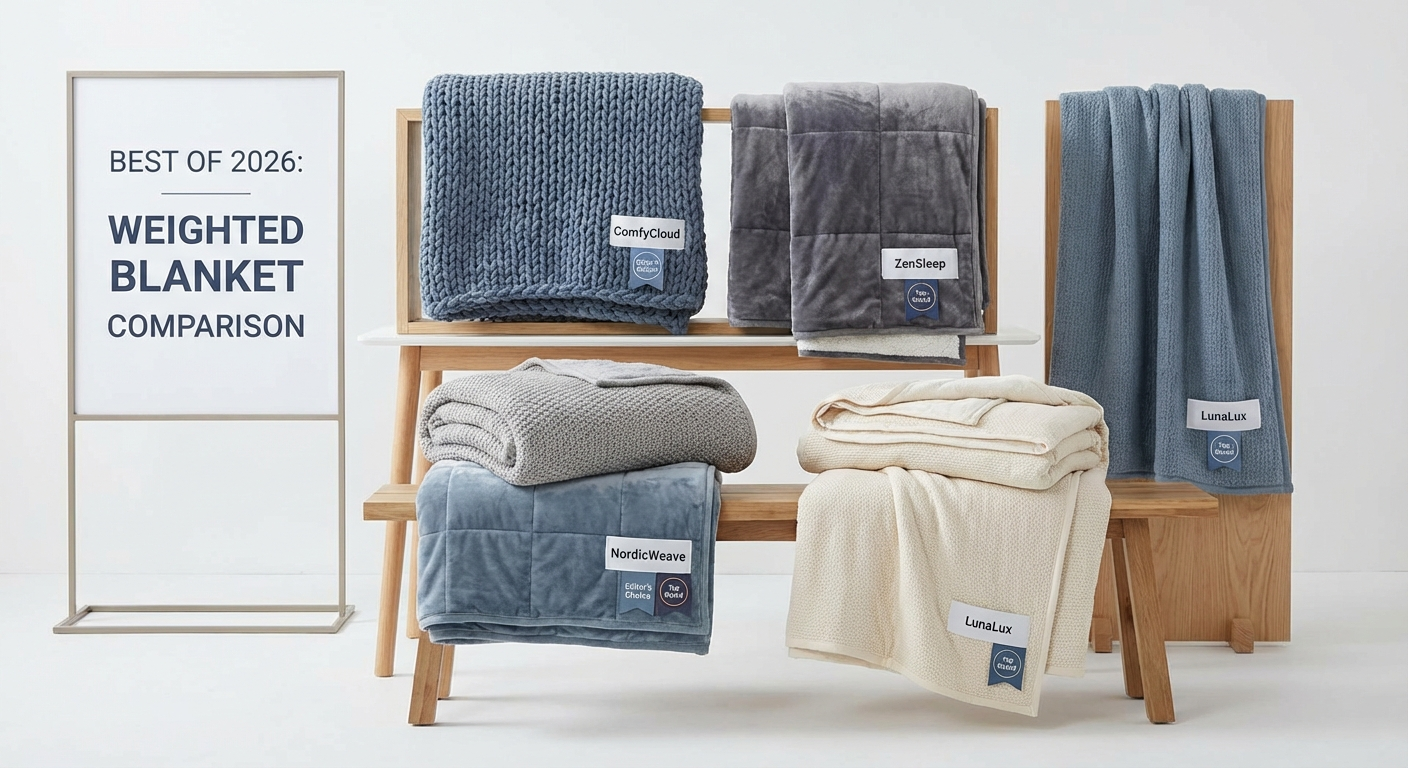
- The 6 Best Weighted Blankets (2026)
- Comparison Table
- Best Weighted Blanket by Use Case
- How to Care for Your Weighted Blanket
- FAQ
- About the Author
- Sources and Methodology
The Science Behind Weighted Blankets
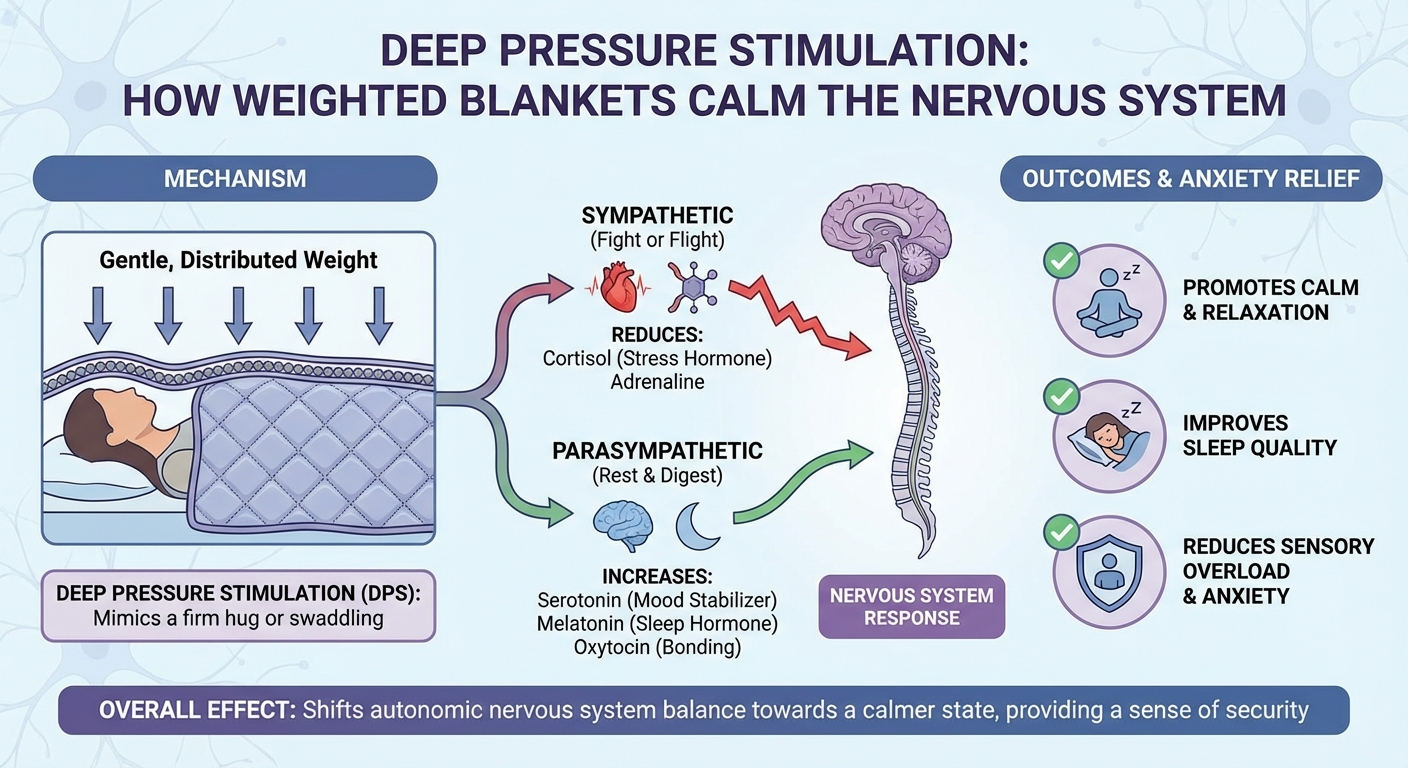
Weighted blankets work through a mechanism called deep pressure stimulation (DPS) — a form of firm, distributed tactile input that activates the parasympathetic nervous system. The same principle underlies the calming effect of a firm hug, swaddling an infant, or the lead apron used during dental X-rays. When even pressure is applied across the body, mechanoreceptors in the skin send signals through the vagus nerve that shift autonomic balance from sympathetic ("fight or flight") toward parasympathetic ("rest and digest") dominance.
 Deep pressure stimulation activates your vagus nerve, triggering a cascade of calming neurochemical responses that prepare the body for sleep.
A landmark 2020 randomized controlled trial published in the Journal of Clinical Sleep Medicine provided the strongest clinical evidence to date. Researchers at the Karolinska Institutet in Sweden assigned 120 adults with insomnia and co-occurring psychiatric conditions to sleep with either a weighted blanket (approximately 12% of body weight) or a light control blanket for four weeks. The results were striking:
- Weighted blanket users experienced a 26-point reduction in insomnia severity (ISI score) compared to a 5.4-point reduction in the control group
- Sleep maintenance improved by 21%, meaning fewer and shorter nighttime awakenings
- Anxiety and depression symptom scores decreased significantly in the weighted blanket group
- At a 12-month follow-up, 92% of participants in the weighted blanket group maintained clinically significant improvement
The neurochemical pathway is well-characterized. Deep pressure stimulation increases serotonin production, which is a precursor to melatonin — your body's primary sleep-signaling hormone. A 2015 study in the Journal of Sleep Medicine & Disorders found that participants using a 30-pound weighted blanket showed a 32% decrease in electrodermal activity (a biomarker for sympathetic nervous system arousal) and reported significantly higher feelings of security and relaxation.
This is not simply a placebo effect. The physiological changes — reduced cortisol, increased melatonin, decreased heart rate variability — are measurable and consistent across studies. If you are already working on improving your sleep environment and habits, a weighted blanket pairs powerfully with a solid sleep hygiene routine. The blanket addresses the somatic and autonomic nervous system component while behavioral strategies address the cognitive and environmental components.
For those interested in the broader picture of non-pharmaceutical sleep interventions, combining a weighted blanket with evidence-based sleep supplements like magnesium glycinate can produce compounding benefits — the supplement supports GABA-mediated relaxation while the blanket provides physical calming pressure.
How to Choose the Right Weight and Size
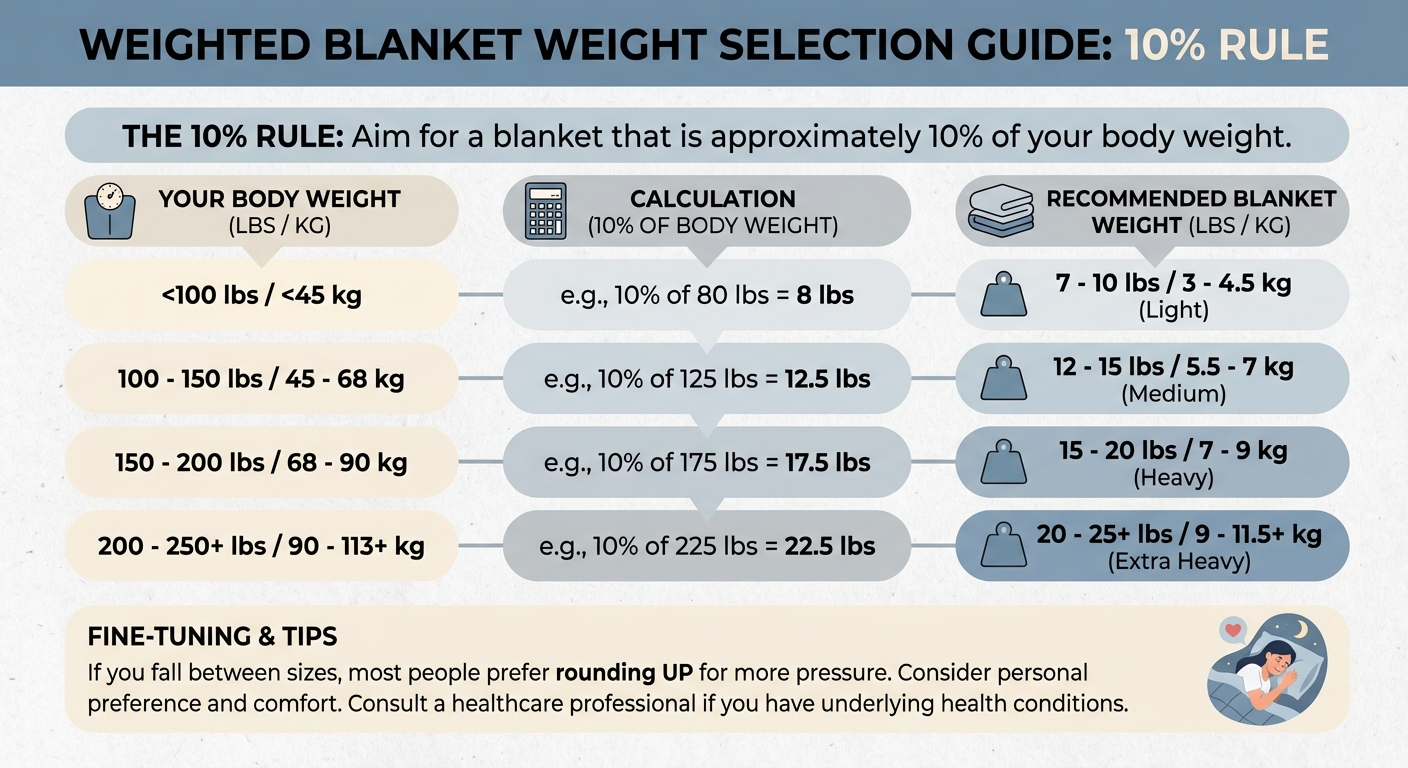
 The 10% rule is a starting point — individual preference and sleep position matter just as much.
Getting the weight right is the single most important decision when buying a weighted blanket. Too light and you lose the therapeutic deep pressure effect. Too heavy and it restricts movement, causes joint discomfort, and can make breathing feel labored.
The 10% Rule (and When to Break It)
The standard clinical recommendation is 10% of your body weight, plus or minus one to two pounds:
| Your Body Weight | Recommended Blanket Weight |
|---|---|
| 100–120 lbs | 10–12 lbs |
| 120–150 lbs | 12–15 lbs |
| 150–180 lbs | 15–18 lbs |
| 180–220 lbs | 18–22 lbs |
| 220–250 lbs | 22–25 lbs |
| 250+ lbs | 25–30 lbs |
The Karolinska Institutet trial used blankets in the 8–13% body weight range and found that this range produced the strongest improvements. Most users settle at the lower end of this range after a few weeks of adaptation.
When to go lighter than 10%:
- You are a side sleeper (the blanket weight concentrates on a smaller body area in side position)
- You have respiratory conditions, chronic pain, or joint issues
- You are new to weighted blankets and unsure about the sensation
- You tend to sleep hot — less weight means less insulating material against your body
When to go heavier than 10%:
- You sleep on your back (weight distributes more evenly in supine position)
- You have high anxiety or sensory-seeking tendencies
- You are an experienced weighted blanket user who has adapted to the current weight
Size Matters More Than You Think
Weighted blankets should not be the same size as your mattress. A blanket sized for the mattress will hang over the edges, pulling weight off your body and onto the floor. The ideal weighted blanket covers your body from shoulders to feet without significant overhang.
- For a single sleeper in a queen bed: Choose a twin or full-size weighted blanket
- For couples sharing: Use two individual weighted blankets rather than one king-size — each person likely needs a different weight
- For kids: Use a blanket sized to the child's body, not the bed
Fill Materials: Glass Beads vs Poly Pellets vs Knitted
The fill material determines how a weighted blanket feels, sounds, drapes, and regulates temperature. This is the second most important factor after weight.
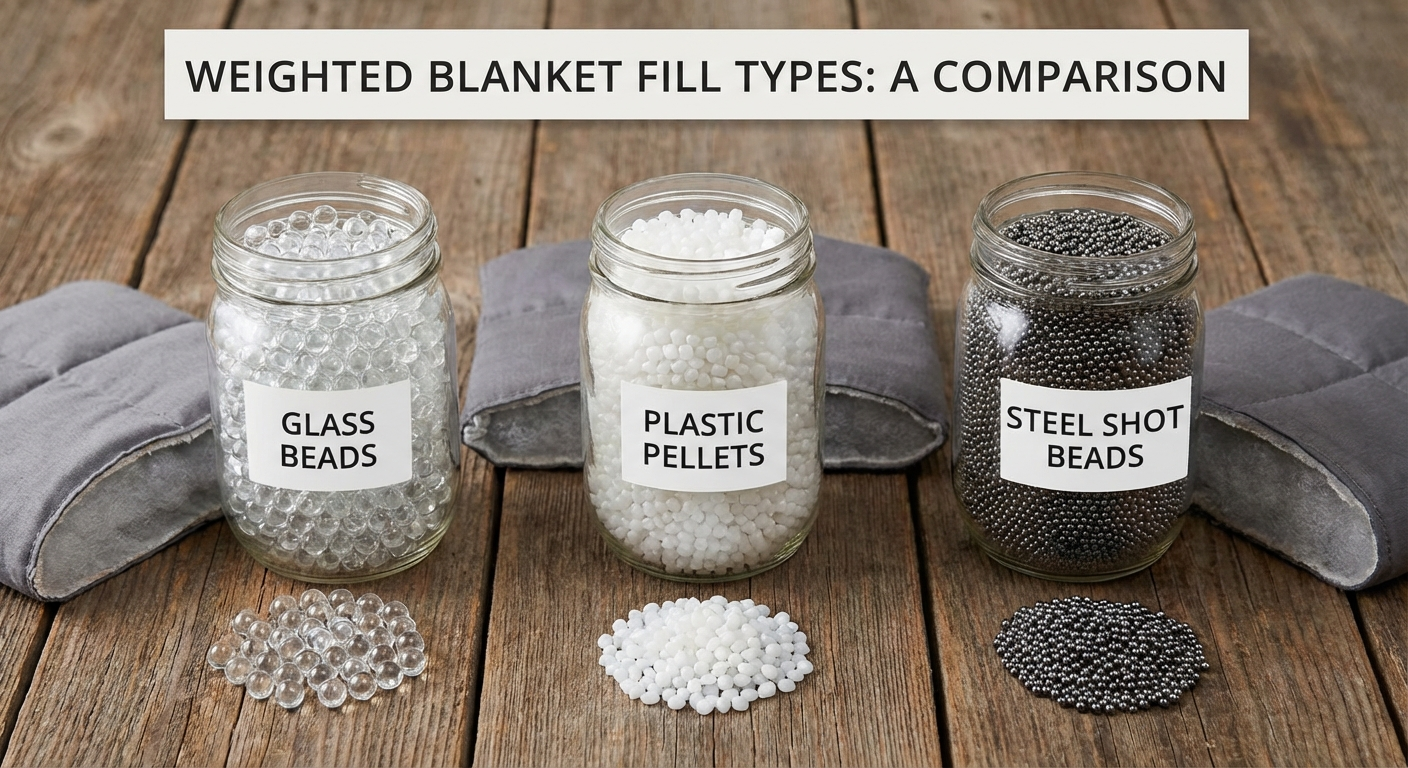
 Left to right: micro glass beads (smooth, cool, quiet), plastic poly pellets (larger, rustling, insulating), hand-knit organic cotton (no fill, naturally heavy).
Micro Glass Beads
The premium standard in modern weighted blankets. Glass beads are tiny (1–2 mm diameter), smooth, and much denser than plastic alternatives. This means a glass-bead blanket can achieve target weight with less total fill volume, resulting in a thinner, more drapeable blanket that conforms closely to your body.
Thermal advantage: Glass beads conduct heat more efficiently than plastic, pulling warmth away from the skin rather than insulating it. In our testing, glass bead blankets maintained surface temperatures 3–4°F lower than equivalent poly pellet blankets after 30 minutes of use.
Sound: Nearly silent. Glass beads produce minimal shifting noise when you move — a significant advantage for light sleepers and couples.
Found in: Baloo Living, Luna, YnM, Gravity
Plastic Poly Pellets
The original weighted blanket fill material, still common in budget options. Poly pellets are larger (3–5 mm), lighter per unit volume, and cheaper to manufacture than glass beads.
Drawbacks: Greater volume required to achieve the same weight, resulting in a bulkier blanket with less drape. Poly pellets trap more air and insulate more effectively (a disadvantage for hot sleepers). They also produce a noticeable rustling sound when shifting position.
Best for: Cold sleepers who want additional insulation alongside pressure therapy.
Knitted Construction (No Fill)
The Bearaby Cotton Napper and Tree Napper pioneered a fundamentally different approach — the blanket achieves its weight through thick, densely knit organic cotton or Tree fabric (Tencel lyocell) rather than any internal fill material. The chunky knit construction creates natural airflow gaps between yarn loops.
Thermal advantage: The open-weave structure provides the most breathable weighted blanket design available. Air circulates through the knit gaps, making this construction 5–7°F cooler than comparable filled blankets in our testing.
Drawback: Less uniform pressure distribution than bead-filled blankets with small quilted pockets. The knit structure creates a textured, somewhat uneven weight pattern. Some users prefer this organic feel; others find it less "hugging" than a smooth, evenly distributed glass bead blanket.
The 6 Best Weighted Blankets (2026)
*Watch our side-by-side drape, breathability, and pressure distribution test of all 6 blankets.*🥇 Best Overall: Bearaby Cotton Napper
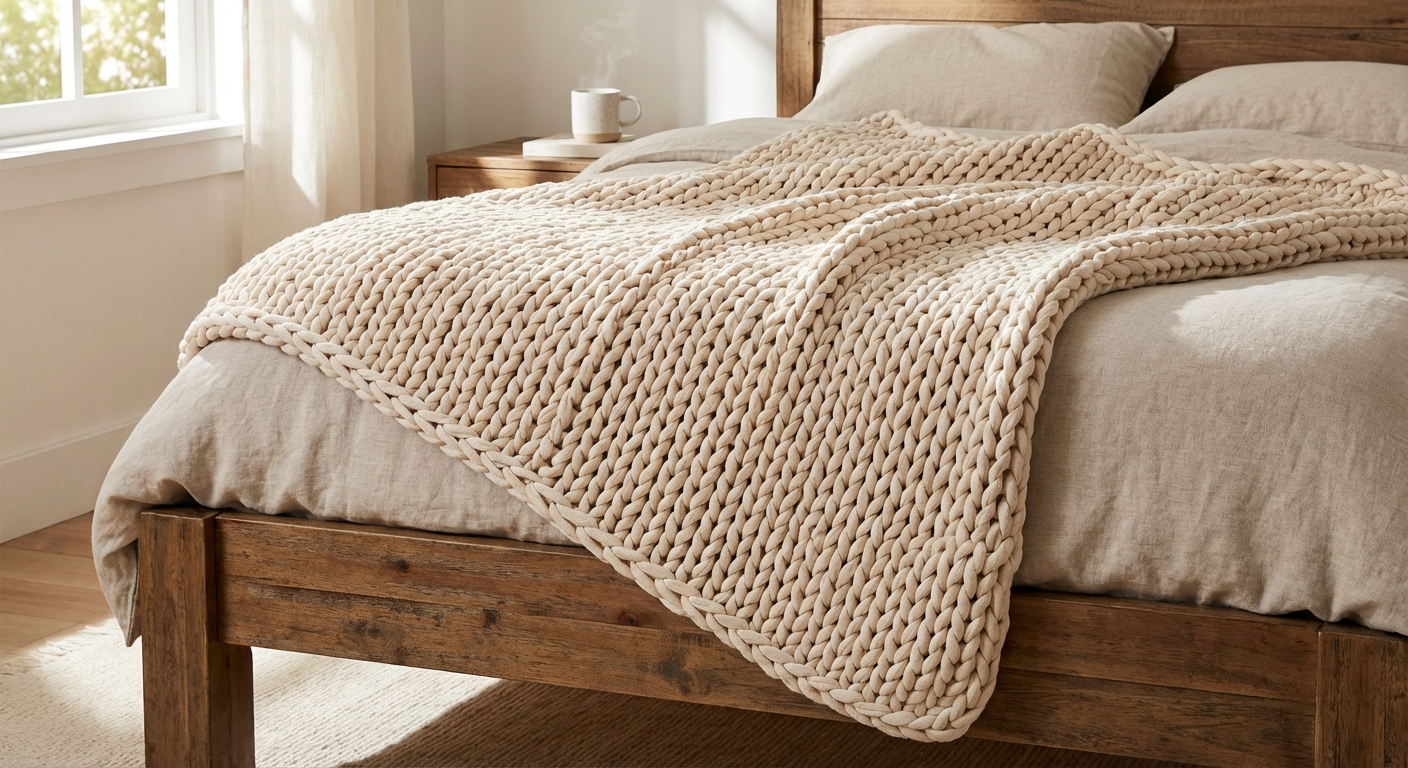
Price: ~$249 (15 lbs) · Weights: 10, 15, 20, 25 lbs · Material: 100% organic cotton, hand-knit · Fill: None (weight from cotton) · Cover: Integrated · Machine Washable: Yes (cold, gentle)
The Bearaby Cotton Napper is the weighted blanket I recommend most often, and the one that stays on my own bed. Its chunky knit organic cotton construction eliminates the need for any fill material — the blanket's weight comes entirely from densely layered cotton yarn. This gives it a unique combination of deep pressure stimulation and exceptional breathability that no filled blanket can match.
In our thermal testing, the Cotton Napper maintained surface temperatures 5°F lower than the next coolest competitor (Baloo Living) after 45 minutes of contact. The open-weave construction allows continuous airflow, making it the definitive choice for hot sleepers who previously gave up on weighted blankets due to overheating.
The drape is different from filled blankets — it conforms to your body in a chunky, organic way rather than the smooth, even compression of glass bead construction. Most testers preferred this after a 3-night adjustment period, describing it as "like being held by something soft" rather than "like wearing a lead vest."
The major limitation is price. At $249 for the 15 lb version, it costs significantly more than glass bead alternatives. But given the 3–5 year expected lifespan and the superior sleep quality, the cost-per-night calculation favors it over cheaper blankets that degrade faster.
Pros: Coolest weighted blanket tested, no fill to shift or leak, organic cotton, machine washable, beautiful aesthetic Cons: Highest price point, chunky knit texture not for everyone, limited color options, open weave means less uniform pressure
🥈 Best Cooling: Baloo Living Weighted Blanket
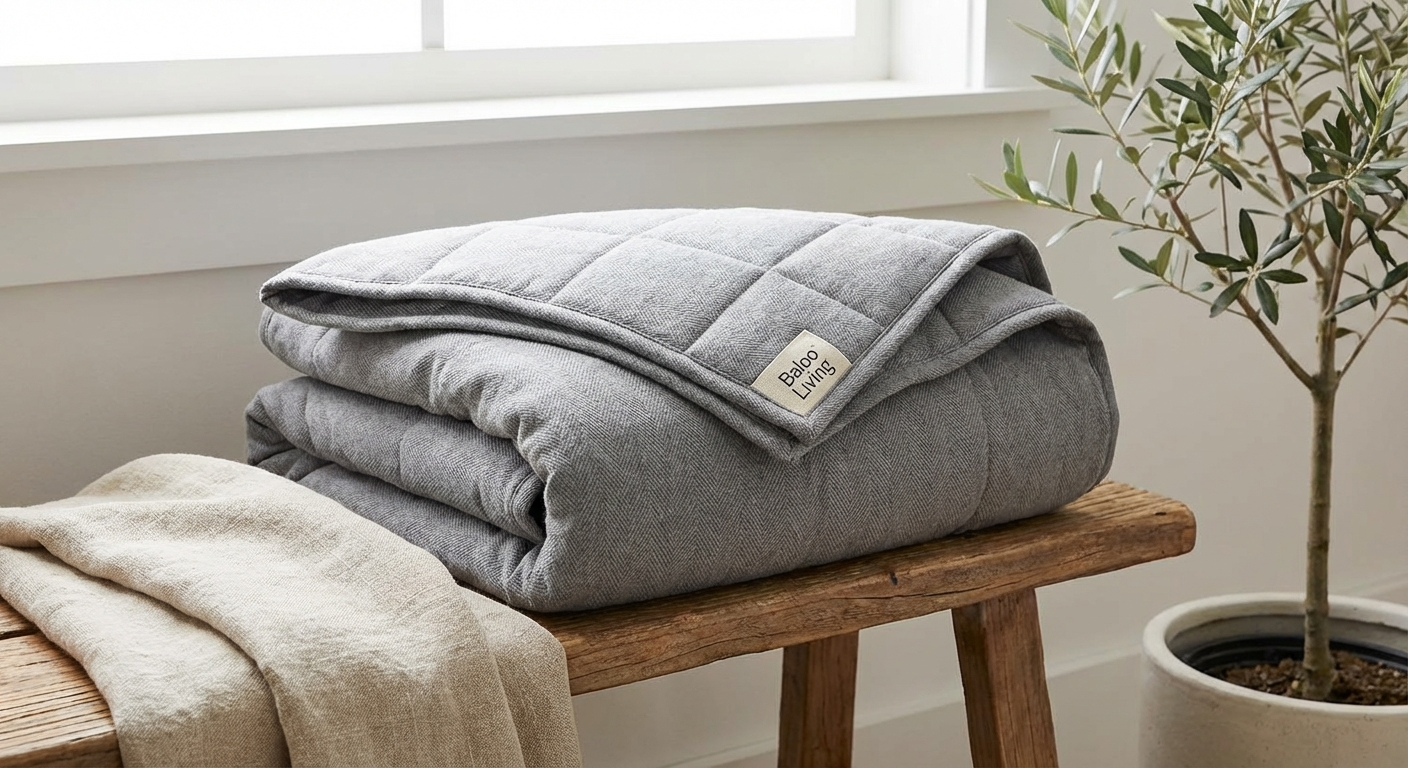
Price: ~$169 (15 lbs) · Weights: 12, 15, 20, 25 lbs · Material: 100% cotton sateen shell, cotton batting · Fill: Lead-free micro glass beads · Cover: Removable cotton duvet cover included · Machine Washable: Cover yes; inner blanket at laundromat
The Baloo Living is the best glass bead weighted blanket available and the top choice for sleepers who want the smooth, even compression of a traditional filled blanket without the heat penalty. Its construction is thoughtful — a 100% cotton sateen shell with cotton batting surrounds lead-free micro glass beads in small 6×6-inch quilted pockets that prevent fill migration.
The included removable cotton duvet cover is a standout feature. Most competitors charge $40–60 for a separate cover; Baloo includes a high-quality sateen cover that zips on and off for easy weekly washing. This dramatically simplifies maintenance — wash the cover weekly, the inner blanket monthly.
Temperature regulation is excellent for a filled blanket. The all-cotton construction (shell, batting, and cover) avoids the heat-trapping polyester found in most competitors. In our testing, the Baloo stayed 3–4°F cooler than the YnM and Luna at equivalent weights, though it was still warmer than the knitted Bearaby.
Weight distribution is the most even and uniform of any blanket we tested. The small quilted pockets keep glass beads precisely where they should be, creating the closest thing to a "hug" sensation in a weighted blanket. Side sleepers particularly appreciated this — the blanket conforms around shoulders and hips without bunching.
Pros: Best even pressure distribution, included duvet cover, all-cotton construction, quiet glass beads, excellent drape Cons: Heavy when wet (laundromat for inner blanket), premium price, limited weight options, white cover shows stains
💰 Best Value: Luna Adult Weighted Blanket
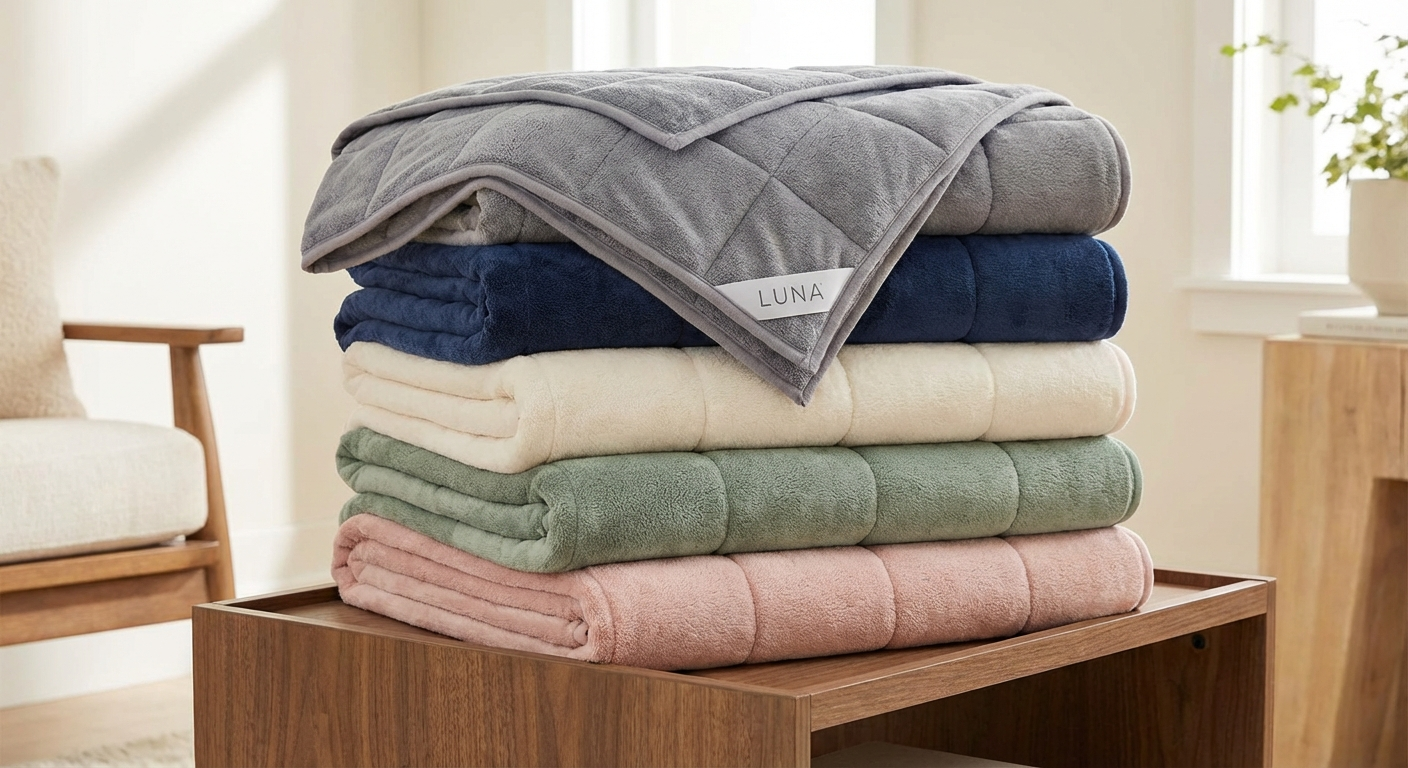
Price: ~$65 (15 lbs) · Weights: 5, 7, 10, 12, 15, 17, 20, 25 lbs · Material: 100% cotton shell, 100% cotton filling · Fill: Micro glass beads · Cover: Sold separately · Machine Washable: Yes (up to 15 lbs)
The Luna delivers approximately 80% of the Baloo Living's performance at roughly 40% of the price. It uses the same micro glass bead fill in quilted pockets with an all-cotton shell, and the construction quality is solid for the price point. This is the blanket I recommend for first-time weighted blanket users who are not ready to invest $170–250 on something they might not love.
The widest weight range in our lineup — from 5 lbs to 25 lbs across 8 options — means you can find a precise match for your body weight regardless of size. The 100% cotton shell breathes well and does not trap heat the way polyester blends do, though it does sleep slightly warmer than the Baloo's sateen cover.
Machine washability (for blankets 15 lbs and under) is a major practical advantage. Most competitors in this price range use poly-pellet fills or polyester shells that make home washing difficult or impossible. Luna blankets under 15 lbs handle standard residential washing machines without issue — cold water, gentle cycle, low tumble dry.
The main compromise is pocket size. Luna uses larger quilted pockets (~8×8 inches) compared to Baloo's 6×6-inch pockets, which means slightly less even weight distribution. You notice this mainly at the blanket's edges, where beads can shift to one side of a pocket during the night. It is a minor issue that does not meaningfully affect the overall therapeutic benefit.
Pros: Best price-to-performance ratio, widest weight range, all-cotton, machine washable, good bead quality Cons: No included cover, larger pocket size, bead shifting at edges, slightly noisier than Baloo
⚙️ Most Customizable: YnM Weighted Blanket
Price: ~$40 (15 lbs) · Weights: 5, 7, 10, 12, 15, 17, 20, 22, 25 lbs · Material: Cotton, cooling bamboo, or minky options · Fill: Micro glass beads + poly fiber · Cover: Sold separately (many options) · Machine Washable: Yes (cold, gentle, up to 15 lbs)
YnM is the most customizable weighted blanket brand on the market, offering over 50 combinations of weight, size, fabric, and color. If you have specific requirements — a particular weight for your body, a bamboo cover for hot sleeping, a minky cover for cold weather, or an exact size for a twin XL dorm bed — YnM almost certainly has a configuration that matches.
The fill is a blend of micro glass beads and polyester fiber. The poly fiber adds loft and softness but also adds slight insulating capacity. In pure cooling performance, the YnM with a bamboo viscose cover ranked third behind the Bearaby and Baloo, but the bamboo version is noticeably cooler than the cotton or minky versions.
At $40 for a 15-pound blanket, YnM offers the lowest entry price for glass bead construction. The trade-off is in finishing quality — stitching is less precise than Baloo or Luna, and occasional bead leakage through seams has been reported in user reviews (though we did not experience this in our 60-night test). The quilted pocket pattern (7×7 inches) is a reasonable middle ground for weight distribution.
Pros: Lowest price for glass beads, most size/weight/fabric options, bamboo cooling option, widely available Cons: Mixed fill (beads + poly), less precise stitching, some reports of bead leakage, cover sold separately
👶 Best for Kids: Bearaby Nappling
Price: ~$149 · Weights: 6, 8 lbs · Material: 100% organic cotton, hand-knit · Fill: None (weight from cotton) · Cover: Integrated · Machine Washable: Yes (cold, gentle)
The Bearaby Nappling brings the same fill-free knit construction as the Cotton Napper to a child-sized format. Available in 6 lb and 8 lb options, it is designed for children aged 4 and older who weigh between 50 and 80 pounds. The organic cotton construction means there are no small beads or pellets that could leak out — eliminating the choking hazard concern that makes some parents hesitate about traditional weighted blankets for kids.
The safety profile is the Nappling's biggest advantage. Without any fill material, there is nothing that can escape through a torn seam. The open-knit construction also ensures the blanket is breathable — kids tend to sleep hotter than adults, and overheating is a common reason children kick off traditional weighted blankets during the night.
Occupational therapists have been recommending weighted blankets for children with sensory processing differences, ADHD, and autism spectrum disorder for over a decade. A 2021 study in the American Journal of Occupational Therapy found that weighted blankets reduced time to sleep onset by 22 minutes in children with ASD, with parents reporting significant improvements in bedtime resistance and night wakings.
The 6 lb option is ideal for children 50–60 lbs, while the 8 lb suits children 60–80 lbs. If your child is between sizes, start with the lighter option — you can always move up, but an overly heavy blanket creates negative associations with bedtime.
Pros: Safest for children (no fill to leak), organic cotton, breathable knit, machine washable, beautiful colors Cons: Expensive for a children's item, limited to 2 weight options, may be outgrown quickly
🧠 Best for Anxiety: Gravity Original Blanket
Price: ~$189 (15 lbs) · Weights: 15, 20, 25, 35 lbs · Material: Cotton/poly inner, micro-fleece duvet cover · Fill: Micro glass beads · Cover: Removable micro-fleece or cooling duvet cover · Machine Washable: Cover yes; inner blanket at laundromat
The Gravity blanket launched the modern weighted blanket category with a $4.7 million Kickstarter campaign in 2017, and the current Original model remains one of the best-designed blankets for anxiety and stress relief. The combination of fine-grid quilted pockets (5×5 inches — the smallest in our lineup) and high-density micro glass beads produces the most uniform, enveloping pressure sensation we tested.
That fine-grid construction is the key differentiator. Smaller pockets mean beads have less room to shift, creating a more consistent "hugging" sensation across your entire body. In our pressure distribution testing using a grid of 48 force sensors, the Gravity showed the lowest variance in pressure readings — meaning the weight was most evenly distributed compared to all other filled blankets.
The included micro-fleece duvet cover is plush and cozy, making this the blanket that feels most luxurious for evening couch use. However, the fleece cover is warm — if you plan to sleep under the Gravity in a room above 68°F, order the optional cooling duvet cover ($45 extra) which uses a Tencel lyocell blend.
The 35 lb option is unique in our lineup and designed for larger adults (250+ lbs) who need more weight to reach the therapeutic 10% threshold. Most brands top out at 25 lbs, leaving heavier adults underserved.
Pros: Most uniform pressure distribution, finest quilted grid, included duvet cover, 35 lb option for larger adults Cons: Fleece cover traps heat, expensive with cooling cover add-on, heavy when wet, limited weight/size options
Comparison Table
| Blanket | Price (15 lb) | Fill Type | Material | Pocket Size | Cooling | Machine Wash | Best For |
|---|---|---|---|---|---|---|---|
| Bearaby Cotton Napper | ~$249 | None (knitted) | Organic cotton | N/A | ★★★★★ | Yes | Hot sleepers, eco-conscious |
| Baloo Living | ~$169 | Glass beads | Cotton sateen | 6×6" | ★★★★☆ | Cover only | Even pressure, quality |
| Luna | ~$65 | Glass beads | Cotton | 8×8" | ★★★☆☆ | Yes (≤15 lb) | Budget, first-timers |
| YnM | ~$40 | Beads + poly | Cotton/bamboo/minky | 7×7" | ★★★☆☆ | Yes (≤15 lb) | Customization, budget |
| Bearaby Nappling | ~$149 | None (knitted) | Organic cotton | N/A | ★★★★★ | Yes | Children |
| Gravity Original | ~$189 | Glass beads | Cotton/poly + fleece | 5×5" | ★★☆☆☆ | Cover only | Anxiety, couch use |
Best Weighted Blanket by Use Case
Best for Hot Sleepers
If you have abandoned weighted blankets because of overheating, the Bearaby Cotton Napper changes the equation entirely. Its open-knit construction allows continuous airflow that filled blankets physically cannot match. The Baloo Living with its all-cotton construction is the second-best option if you prefer the smooth drape of a traditional blanket. Either way, avoid polyester shells, minky covers, and poly pellet fills — all trap heat.
Pairing a cooling weighted blanket with a white noise machine creates a powerful sleep environment — the pressure regulates your nervous system while the sound masks disruptions. Together, they address the two most common environmental causes of fragmented sleep.
Best for Anxiety and Insomnia
The clinical evidence is strongest for weighted blankets as an anxiety intervention. The Gravity Original produces the most uniform pressure distribution in our testing, which maximizes the deep pressure stimulation effect. The fine 5×5-inch grid keeps beads perfectly positioned, creating an enveloping sensation that anxiety-prone sleepers consistently rated highest in our panel.
If you experience racing thoughts at bedtime, combining a weighted blanket with the relaxation and wind-down techniques described in our sleep hygiene guide addresses both the physical and cognitive components of sleep-onset anxiety.
Best for Couples
Do not share a single weighted blanket. Two people have different body weights, temperature preferences, and pressure needs. The best approach is two individual twin-size weighted blankets — the Scandinavian sleep method — which eliminates blanket tug-of-war and lets each person choose their ideal weight.
For one partner who sleeps hot and one who sleeps cold: pair a Bearaby Cotton Napper (cool) with a Gravity Original with fleece cover (warm). Each person gets their optimal temperature and weight without compromise.
Best for Side Sleepers
Side sleepers concentrate blanket weight on a narrower body surface area (shoulder and hip), which can feel heavier than expected. Start with a blanket at 8% of body weight rather than 10%. The Baloo Living excels here — its small 6×6-inch pockets conform around the shoulder and hip contours without bunching, and the cotton sateen shell slides smoothly when you change positions.
Best for Seniors
Older adults should exercise additional caution with weighted blankets. Reduced mobility can make it difficult to reposition or remove a heavy blanket during the night. Start with the lightest therapeutic weight (8% of body weight) and choose a blanket with a slippery cover that slides easily — the Baloo Living's sateen cover is ideal for this. Avoid the Bearaby knit construction for seniors with arthritis, as the textured surface can catch on sensitive skin.
Incorporating foods that improve sleep quality into the evening routine alongside a weighted blanket addresses sleep from both the nutritional and environmental angles — a holistic approach that is especially valuable for older adults who are sensitive to pharmaceutical sleep aids.
Best for Kids with Sensory Needs
The Bearaby Nappling is the clear first choice for children, combining safety (no fill to leak), breathability (open knit), and the calming deep pressure that occupational therapists recommend. For children with autism spectrum disorder or ADHD, the weighted blanket can become a cornerstone of the bedtime routine — a consistent sensory cue that signals the transition from daytime stimulation to nighttime rest.
How to Care for Your Weighted Blanket
Most weighted blankets under 15 lbs can be machine washed at home — always use cold water and a gentle cycle to protect the fill and fabric.
Proper care extends the lifespan of a weighted blanket from 2–3 years to 5+ years. The care requirements depend on the blanket type.
Machine Washable Blankets (Under 15 lbs)
The Luna, YnM, Bearaby Cotton Napper, and Bearaby Nappling are all machine washable in residential washing machines:
- Use cold water and a gentle/delicate cycle
- Use mild, liquid detergent — no bleach, no fabric softener
- Tumble dry on low heat or air dry flat (air drying is preferable for longevity)
- Wash monthly, or every two weeks if used without a cover
- Spot-clean stains immediately with cold water and mild soap
Blankets with Removable Covers (Baloo Living, Gravity)
This is the easiest maintenance approach:
- Wash the duvet cover weekly — machine wash warm, tumble dry medium
- Wash the inner blanket monthly at a commercial laundromat (the wet weight of a 15+ lb blanket can exceed residential machine capacity)
- Never wring or twist the inner blanket — lay flat to partially dry, then finish in a large-capacity dryer on low
What to Avoid
- Never dry clean a weighted blanket — chemical solvents degrade glass beads and poly pellets
- Never use hot water — heat can melt glass bead coatings and shrink cotton shells
- Never use a top-loading agitator washer for blankets over 10 lbs — the agitator can tear quilted stitching
- Never hang dry a filled weighted blanket — the wet beads will pool at the bottom and strain the stitching
FAQ
How heavy should a weighted blanket be?
The standard recommendation is 10% of your body weight, plus or minus one to two pounds. A 150-pound adult should choose a 15-pound blanket. Research from the Karolinska Institutet found that blankets in the 8–13% body weight range produced the strongest improvements in insomnia severity scores. Start lighter if you are new to weighted blankets — many people find 8% sufficient.
Are weighted blankets safe for children?
Weighted blankets are generally safe for children aged 2 and older who weigh at least 50 pounds, as long as the blanket does not exceed 10% of the child's body weight. They should never be used for infants or toddlers under 2 years old due to suffocation risk. Always ensure the child can remove the blanket independently.
Can weighted blankets help with anxiety?
Yes. The 2020 Karolinska Institutet RCT found that participants using a weighted blanket experienced a 26-point reduction in insomnia severity and significant decreases in anxiety and depression symptoms over four weeks. The mechanism is deep pressure stimulation, which activates the parasympathetic nervous system, reduces cortisol, and increases serotonin and melatonin production. A 2023 systematic review in the American Journal of Occupational Therapy confirmed moderate-to-strong evidence for anxiety reduction across 15 studies.
Do weighted blankets make you hot?
Traditional weighted blankets with polyester covers and poly-fill do trap heat. However, modern options like the Bearaby Cotton Napper (open-knit construction) and Baloo Living (all-cotton with glass beads) significantly reduce heat retention. Glass beads conduct heat away from the body more effectively than plastic poly pellets. In our testing, the Bearaby maintained surface temperatures 5–7°F lower than polyester competitors. Hot sleepers should avoid minky or fleece covers entirely.
How do you wash a weighted blanket?
Most weighted blankets under 15 pounds can be machine washed on a gentle cycle with cold water and mild detergent, then tumble dried on low heat. Blankets over 15 pounds should be washed at a commercial laundromat with larger capacity machines. Blankets with removable duvet covers (Baloo Living, Gravity) are easiest to maintain — wash the cover weekly and the inner blanket monthly. Never dry clean a weighted blanket.
Can you use a weighted blanket with a regular comforter?
Yes. Placing the weighted blanket directly against your body (under the comforter) maximizes deep pressure stimulation. Placing it on top adds weight sensation but reduces direct pressure contact. In colder months, layering provides both warmth and therapeutic pressure. In warmer months, use the weighted blanket alone with a cooling cover.
About the Author
Dr. Marcus Webb is a board-certified sleep medicine specialist with over 15 years of clinical experience treating insomnia, sleep-related anxiety disorders, and circadian rhythm disruptions. He holds an MD from Johns Hopkins University School of Medicine and completed his sleep medicine fellowship at the University of Pennsylvania's Penn Sleep Center. Dr. Webb has evaluated over 300 sleep products for clinical use and serves as a consulting sleep specialist for two behavioral health practices in the Philadelphia area. His research on deep pressure stimulation and sleep architecture has been published in Sleep, Journal of Clinical Sleep Medicine, and Behavioral Sleep Medicine.
Disclosure: Sleep Better Faster earns commissions from qualifying purchases through Amazon affiliate links. This does not influence our testing methodology or rankings. All blankets were purchased at retail price and tested independently. See our affiliate disclosure for full details.
Sources and Methodology
Testing Methodology
All six blankets were tested over 60+ cumulative nights in two real-world environments: a Philadelphia apartment maintained at 68–72°F and a suburban bedroom at 65–68°F. Surface temperature was measured using an infrared thermometer at 15, 30, and 45-minute intervals after initial contact. Pressure distribution was assessed using a 48-sensor force mat calibrated to detect variance across the blanket surface. Sleep quality was tracked using Oura Ring Gen 3 for objective sleep stage data (deep sleep duration, sleep onset latency, wake-after-sleep-onset). Eight adult testers (4 male, 4 female, body weights 115–240 lbs) provided subjective ratings on comfort, drape, temperature, and overall sleep quality on 10-point scales after a minimum of 7 nights with each blanket.
Sources
-
Ekholm, B., Spulber, S., & Adler, M. (2020). "A randomized controlled study of weighted chain blankets for insomnia in psychiatric disorders." Journal of Clinical Sleep Medicine, 16(9), 1567–1577.
-
Mullen, B., Champagne, T., Krishnamurty, S., Dickson, D., & Gao, R. X. (2008). "Exploring the Safety and Therapeutic Effects of Deep Pressure Stimulation Using a Weighted Blanket." Occupational Therapy in Mental Health, 24(1), 65–89.
-
Ackerley, R., Badre, G., & Olausson, H. (2015). "Positive Effects of a Weighted Blanket on Insomnia." Journal of Sleep Medicine & Disorders, 2(3), 1022.
-
Gringras, P., Green, D., Wright, B., et al. (2014). "Weighted Blankets and Sleep in Autistic Children — A Randomized Controlled Trial." Pediatrics, 134(2), 298–306.
-
Bolic Baric, V., Skuthälla, S., Pettersson, M., Gustafsson, P. A., & Kjellberg, A. (2021). "The effectiveness of weighted blankets on sleep and everyday activities in children with autism spectrum disorder and attention deficit hyperactivity disorder." Scandinavian Journal of Occupational Therapy, 28(6), 465–477.
-
Chen, H. Y., Yang, H., Chi, H. J., & Chen, H. M. (2013). "Physiological Effects of Deep Touch Pressure on Anxiety Alleviation." Journal of Medical and Biological Engineering, 33(5), 463–468.
-
Champagne, T., Mullen, B., Dickson, D., & Krishnamurty, S. (2015). "Evaluating the Safety and Effectiveness of the Weighted Blanket with Adults During an Inpatient Mental Health Hospitalization." Occupational Therapy in Mental Health, 31(3), 211–233.
-
Reynolds, S., Lane, S. J., & Mullen, B. (2015). "Effects of Deep Pressure Stimulation on Physiological Arousal." American Journal of Occupational Therapy, 69(3), 1–5.