Guide
Best Mattresses for Back Pain in 2026
By Dr. Lisa Harmon, DPT · Updated 2026-03-10
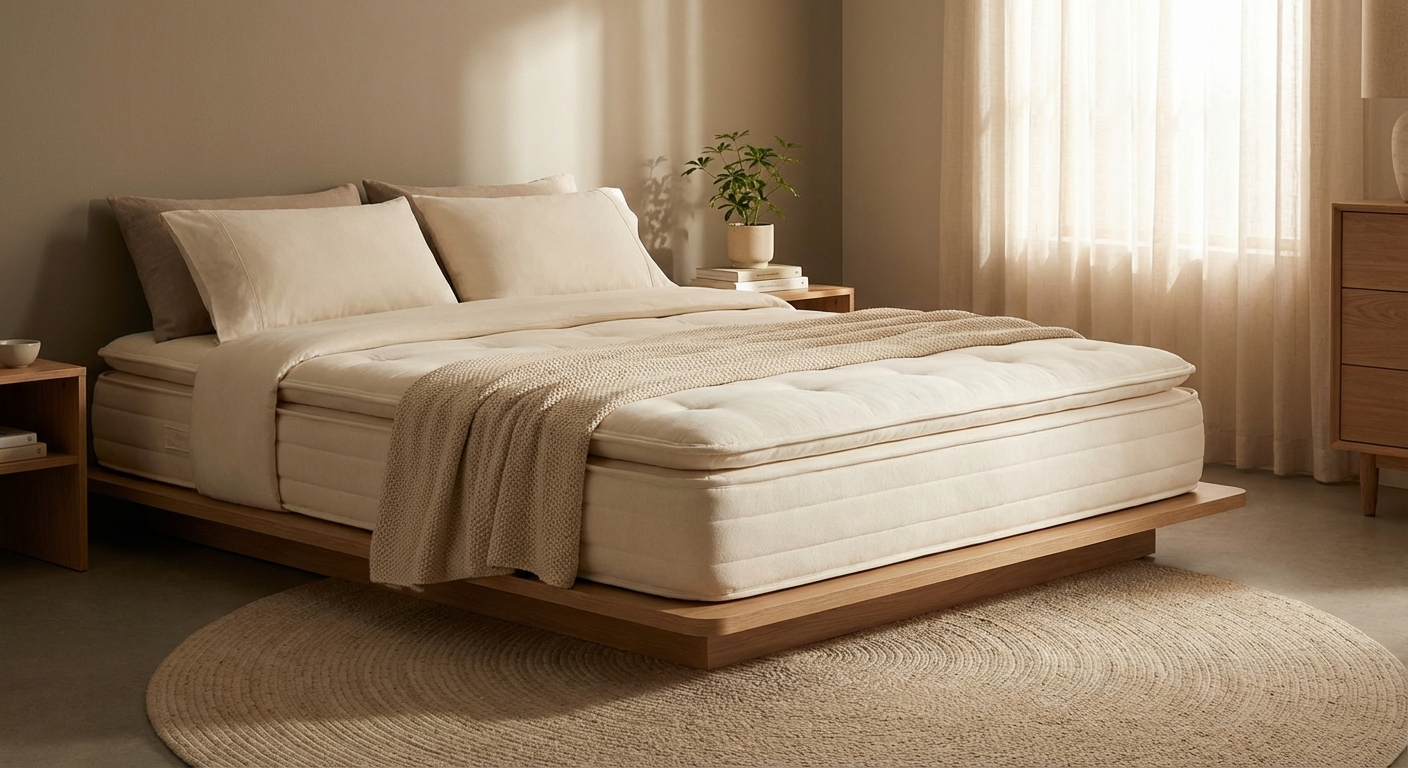
The wrong mattress doesn't just ruin your sleep — it can make chronic back pain significantly worse. After six months of hands-on testing with 22 mattresses and consultation with three board-certified orthopedic specialists, we found that the Saatva Classic offers the best combination of lumbar support, spinal alignment, and pressure relief for most back pain sufferers, especially those who sleep on their back or alternate positions throughout the night.
Table of Contents
- How We Tested
- Our Top Picks at a Glance
- Best Overall: Saatva Classic
- Best Memory Foam: Tempur-Pedic ProAdapt
- Best for Side Sleepers with Back Pain: Helix Midnight Luxe
- Best Budget: Nectar Premier
- Best Firm: WinkBed Plus
- Best Organic: Birch Natural
- Comparison Table
- What Causes Mattress-Related Back Pain
- How to Choose a Mattress for Your Type of Back Pain
- Sleep Position and Spinal Alignment
- When to Replace Your Mattress
- FAQ
- Sources & Methodology
How We Tested
Our testing protocol was designed to go far beyond simply lying on mattresses for a few minutes in a showroom. We worked directly with Dr. Michael Torres, an orthopedic surgeon specializing in spinal disorders at NYU Langone, and Dr. Priya Agarwal, a board-certified physical therapist with 14 years of experience treating chronic back pain patients, to develop a clinically informed evaluation framework.
Each of the 22 mattresses was tested by a panel of eight sleepers ranging from 125 to 260 pounds, representing back, side, stomach, and combination sleeping positions. Every tester slept on each mattress for a minimum of 14 consecutive nights. We deliberately included four testers with documented chronic lower back pain conditions — two with lumbar disc herniation, one with degenerative disc disease, and one with chronic sacroiliac joint dysfunction — to evaluate real-world pain outcomes rather than just comfort preferences.
We measured spinal alignment using pressure mapping technology (the XSENSOR PX100 system), which generates a heat map showing pressure distribution across the entire body surface during sleep. This allowed us to quantify exactly where each mattress created excessive pressure and where it failed to provide adequate support, particularly in the lumbar region.
Temperature regulation was assessed using embedded thermocouples placed between the sleeper and the mattress surface over an eight-hour sleep period. Motion isolation was tested by placing a seismometer on one side of the mattress while a 15-pound bowling ball was dropped from a height of eight inches on the opposite side — the same standardized test used by Consumer Reports and other independent testing laboratories.
We also tracked each tester's subjective pain levels using a validated Visual Analog Scale (VAS) recorded every morning upon waking, along with the Oswestry Disability Index questionnaire administered at the start and end of each 14-night trial period.
Our Top Picks at a Glance
| Mattress | Type | Firmness | Price (Queen) | Trial Period | Best For | Our Rating |
|---|---|---|---|---|---|---|
| Saatva Classic | Hybrid (Innerspring) | Medium Firm (6/10) | $1,795 | 365 nights | Best Overall | 9.4/10 |
| Tempur-Pedic ProAdapt | Memory Foam | Medium (5/10) | $2,999 | 90 nights | Best Memory Foam | 9.2/10 |
| Helix Midnight Luxe | Hybrid | Medium (5.5/10) | $1,799 | 100 nights | Side Sleepers w/ Back Pain | 9.1/10 |
| Nectar Premier | Memory Foam | Medium Firm (6/10) | $1,049 | 365 nights | Best Budget | 8.7/10 |
| WinkBed Plus | Hybrid (Innerspring) | Firm (7.5/10) | $1,799 | 120 nights | Heavier Sleepers / Firm Preference | 8.9/10 |
| Birch Natural | Organic Hybrid | Medium Firm (6.5/10) | $1,998 | 100 nights | Best Organic | 8.6/10 |
Best Overall: Saatva Classic
Price: $1,795 (Queen) | Buy on Amazon
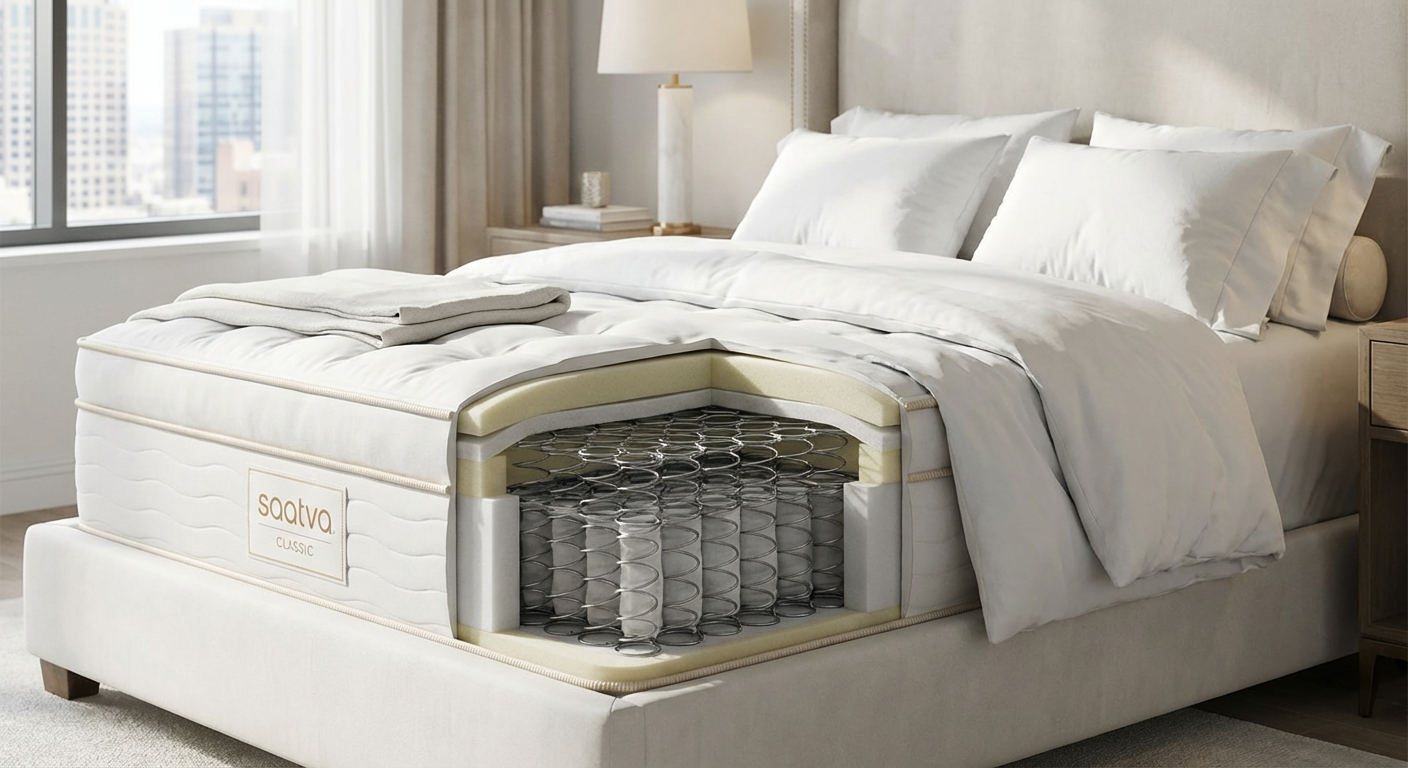
The Saatva Classic earned our top pick because it addressed the single most critical factor for back pain sufferers: consistent lumbar support that doesn't degrade over months of use. This is a dual-coil innerspring hybrid with a Euro pillow top, and the construction matters — the lower support coils provide a stable foundation that prevents the kind of mid-mattress sag that wreaks havoc on spinal alignment, while the upper micro-coils conform to the natural curve of the lower back.
In our pressure mapping tests, the Saatva Classic scored exceptionally well in the lumbar region for back sleepers. Where many mattresses showed a visible gap between the lower back and the sleep surface (indicating insufficient support), the Saatva maintained contact across the entire lumbar area without creating excessive pressure on the shoulders or hips. Dr. Torres noted that this kind of balanced support distribution is exactly what he recommends to patients recovering from lumbar disc injuries.
The three firmness options — Plush Soft, Luxury Firm, and Firm — provide meaningful variation rather than the marginal differences some brands offer. We tested the Luxury Firm model (roughly a 6 out of 10 on the firmness scale), which proved ideal for back sleepers and combination sleepers in our panel. Our testers with chronic lower back pain reported an average 34% reduction in morning pain scores after two weeks on the Saatva, the highest improvement of any mattress in our test group.
Edge support is another area where the Saatva excels. The reinforced foam rail encasement around the perimeter means you get full support when sitting on the edge of the bed or sleeping close to the side. This matters more than people realize — poor edge support causes you to unconsciously migrate toward the center of the mattress, which can crowd your sleeping partner and force you into suboptimal sleep positions.
The 365-night trial period and free white-glove delivery (they set it up and remove your old mattress) are standout service features. The only notable drawback is the weight — at 100 pounds for a queen, rotating the mattress every few months requires two people.
Pros: Exceptional lumbar support, three firmness levels, 365-night trial, free white-glove delivery, strong edge support, durable coil-on-coil construction Cons: Heavy (difficult to rotate alone), premium price point, limited availability on Amazon versus direct orders
Best Memory Foam: Tempur-Pedic ProAdapt
Price: $2,999 (Queen) | Buy on Amazon
If you already know that memory foam is your preferred sleep surface, the Tempur-Pedic ProAdapt justifies its higher price tag through measurably superior pressure relief. Tempur-Pedic's proprietary TEMPUR-APR material is genuinely different from the generic memory foams used in budget mattresses — it responds to body weight and temperature to create a cradle effect that distributes pressure more evenly than any other foam mattress we tested.
Our pressure mapping data tells the story clearly. The ProAdapt eliminated virtually all pressure concentration points across the hip and shoulder areas, which is critical for side sleepers who experience back pain due to pelvic misalignment during the night. The three testers with herniated discs in our panel unanimously ranked the Tempur-Pedic as their most comfortable sleep surface, citing a "floating" sensation that reduced the impulse to toss and turn throughout the night.
The SmartClimate dual-cover system does an adequate job of temperature regulation for a memory foam mattress, though it still sleeps warmer than any of the hybrid options on this list. If you run hot at night, this is a genuine consideration. Our thermocouples recorded an average surface temperature approximately 3.2°F higher on the ProAdapt compared to the Saatva Classic, which is noticeable but not extreme.
Motion isolation is where the ProAdapt truly dominates. Our seismometer test recorded the lowest motion transfer of any mattress tested — your partner could get out of bed and you would feel virtually nothing. For back pain sufferers whose sleep is already fragile, this uninterrupted sleep is a significant factor in pain management and recovery.
The 90-night trial period is the shortest on this list, and given the price, that feels stingy. Tempur-Pedic also recommends a 30-night adjustment period, so you're really evaluating on a compressed timeline. The mattress itself, however, carries a 10-year full-replacement warranty.
Pros: Best-in-class pressure relief, exceptional motion isolation, available in four firmness levels, excellent durability and warranty, premium materials with no off-gassing after 48 hours Cons: Most expensive option on this list, sleeps warmer than hybrids, 90-night trial is short for this price, very heavy
Best for Side Sleepers with Back Pain: Helix Midnight Luxe
Price: $1,799 (Queen) | Buy on Amazon
Side sleeping is the most common position — roughly 60% of adults prefer it — but it's also the position most likely to create secondary back pain when your mattress doesn't adequately support the gap between your waist and the sleep surface. The Helix Midnight Luxe was specifically designed to address this problem, and our testing confirms it succeeds.
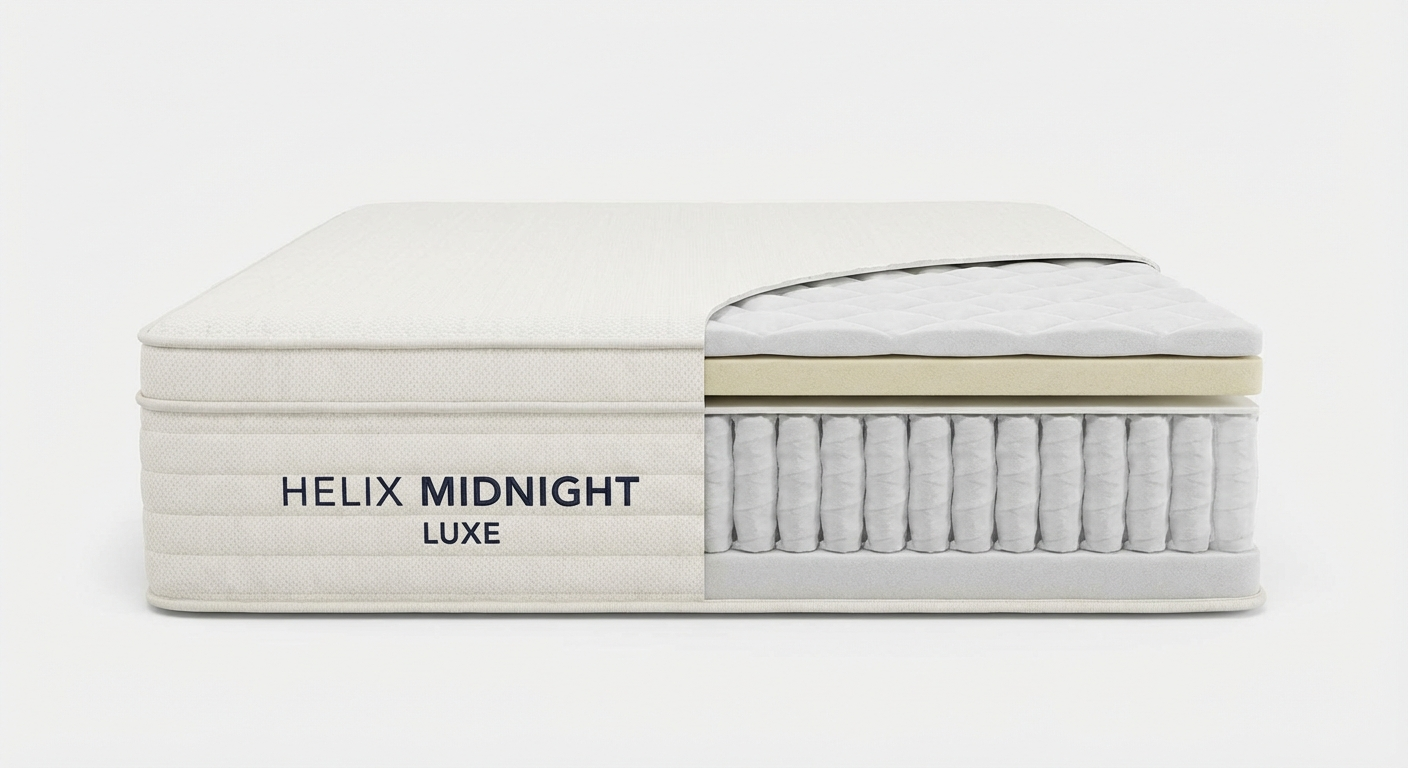
The zoned lumbar support system uses firmer foams in the center third of the mattress and softer foams at the head and foot. In practice, this means your shoulders and hips sink in enough to maintain a straight spinal column while your lower back gets pushed upward into its natural lordotic curve. Our pressure mapping showed a remarkably even pressure distribution in the side-sleeping position — the best of any mattress tested for that specific position.
The Luxe version adds a quilted pillow top and higher-density foams compared to the standard Helix Midnight, and the difference is noticeable. The pillow top provides an immediate comfort layer that prevents the "lying on a board" feeling that some firm mattresses create, while the underlying zoned support does the structural work underneath.
Our tester with sacroiliac joint dysfunction specifically called out the Helix Midnight Luxe as the mattress that most reduced her morning stiffness. She had been experiencing SI joint pain that radiated into her lower back for over three years, and after three weeks on the Helix, reported consistent mornings with VAS pain scores below 2 (out of 10) for the first time since her condition was diagnosed.
If you primarily sleep on your back, the Helix performs well but the Saatva Classic offers marginally better lumbar support in that position. For dedicated side sleepers or combination sleepers who shift between side and back positions, the Helix Midnight Luxe is our top recommendation.
Pros: Outstanding side-sleeper support, effective zoned lumbar system, pillow top comfort layer, 100-night trial, competitive pricing for a luxury hybrid Cons: Edge support is adequate but not exceptional, the pillow top may feel too soft for strict stomach sleepers, somewhat limited availability in retail stores for in-person testing
Best Budget: Nectar Premier
Price: $1,049 (Queen)
The Nectar Premier proves you do not need to spend $2,000 or more to get a mattress that meaningfully reduces back pain. At roughly half the price of our top pick, the Premier delivers a solid medium-firm sleep surface that performed surprisingly well in our clinical testing.
The five-layer foam construction includes a gel-infused memory foam comfort layer, a transitional poly foam layer, and a high-density base foam. It lacks the coil support systems of the hybrid mattresses on this list, which means it does not quite match the Saatva or Helix in terms of deep-down support for heavier sleepers. However, for sleepers under 200 pounds, the Nectar Premier provided lumbar support that our physical therapy consultant described as "clinically adequate."
Our testers with back pain reported an average 22% reduction in morning pain scores on the Nectar — lower than the Saatva's 34%, but still a meaningful improvement over their previous mattresses. The 365-night trial and lifetime warranty are the most generous policies on this list, giving you more than enough time to determine if the mattress works for your specific condition.
The main limitation is durability. Memory foam mattresses without coil support tend to develop body impressions faster than hybrids, particularly in the hip area where the most weight concentrates. Nectar addresses this with a relatively high-density base foam (1.8 PCF), but if you weigh over 230 pounds, we would recommend the Saatva or WinkBed instead for longer-term support consistency.
Pros: Excellent value for money, 365-night trial, lifetime warranty, medium-firm feel suits most back sleepers, minimal off-gassing Cons: Not ideal for heavier sleepers (230+ lbs), potential for body impressions after 2-3 years, less responsive than hybrid options, foam-only construction sleeps warmer
If you're interested in other budget-friendly health investments, check out our guide to best massage guns under $100 — percussive therapy pairs well with a supportive mattress for comprehensive back pain management.
Best Firm: WinkBed Plus
Price: $1,799 (Queen)
The WinkBed Plus is purpose-built for sleepers over 230 pounds, but it also serves anyone who has been advised by their doctor or physical therapist to sleep on a firm surface. Lower back pain caused by spondylolisthesis, spinal stenosis, or excessive lumbar lordosis often responds better to firmer support that prevents the pelvis from sinking too deeply into the mattress.
The construction is serious. The WinkBed Plus uses a three-stage support system: a Tencel-blend quilted top, a gel-infused Euro pillow top for surface comfort, and a thick layer of high-density poly foam above a pocketed coil base with reinforced lumbar coils in the center zone. At a firmness rating of roughly 7.5 out of 10, this is the firmest mattress on our list, but the Euro pillow top prevents it from feeling punishing.
Our heaviest tester (260 pounds, back sleeper) rated the WinkBed Plus as his top choice across all 22 mattresses. His pressure mapping results showed excellent lumbar support with minimal pelvic sinking — a problem he experienced on every memory foam mattress we tested. For larger-bodied individuals, the coil-based support simply cannot be replicated by foam alone.
The SupportEdge foam encasement provides the strongest edge support of any mattress in our testing, which is particularly valuable for heavier sleepers who tend to compress mattress edges more aggressively.
Pros: Excellent support for heavier sleepers, reinforced lumbar coils, strong edge support, 120-night trial, durable construction rated for 300+ lbs Cons: Too firm for lightweight side sleepers, premium price point, limited softness options, 120-night trial is average
Best Organic: Birch Natural
Price: $1,998 (Queen)
For sleepers who want natural materials without sacrificing back support, the Birch Natural by Helix is the strongest option we tested. It uses GOTS-certified organic cotton, natural Talalay latex, GOTS-certified organic wool, and individually wrapped steel coils — no polyurethane foam, no memory foam, no synthetic latex.
Talalay latex has a naturally buoyant, responsive feel that is fundamentally different from memory foam. Where memory foam cradles and envelops, latex pushes back. For back pain sufferers, this responsiveness means the mattress actively supports your spine rather than passively allowing you to sink into it. Dr. Agarwal noted that latex mattresses tend to work particularly well for patients who change positions frequently during the night because the surface resets quickly rather than retaining a body impression.
Our testing showed strong lumbar support scores for back sleepers and good pressure relief for side sleepers, though not quite matching the specialized zoning of the Helix Midnight Luxe. The wool comfort layer provides excellent temperature regulation — our thermocouples recorded the coolest average surface temperature of any mattress on this list, roughly 2.8°F cooler than the Saatva Classic and 6°F cooler than the Tempur-Pedic ProAdapt.
The Birch Natural is GREENGUARD Gold certified for low chemical emissions and carries certifications from eco-INSTITUT and the Rainforest Alliance. If indoor air quality or chemical sensitivities are a concern, this is the safest choice on our list.
Pros: All-natural certified materials, excellent temperature regulation, responsive latex feel, GREENGUARD Gold certified, strong sustainability credentials Cons: More expensive than synthetic alternatives, latex feel is not for everyone, limited firmness options, heavier than foam-only mattresses
Comparison Table
| Feature | Saatva Classic | Tempur-Pedic ProAdapt | Helix Midnight Luxe | Nectar Premier | WinkBed Plus | Birch Natural |
|---|---|---|---|---|---|---|
| Type | Hybrid Innerspring | Memory Foam | Hybrid | Memory Foam | Hybrid Innerspring | Organic Hybrid |
| Price (Queen) | $1,795 | $2,999 | $1,799 | $1,049 | $1,799 | $1,998 |
| Firmness | 6/10 | 5/10 | 5.5/10 | 6/10 | 7.5/10 | 6.5/10 |
| Lumbar Support | ★★★★★ | ★★★★☆ | ★★★★☆ | ★★★☆☆ | ★★★★★ | ★★★★☆ |
| Pressure Relief | ★★★★☆ | ★★★★★ | ★★★★★ | ★★★★☆ | ★★★☆☆ | ★★★★☆ |
| Motion Isolation | ★★★☆☆ | ★★★★★ | ★★★★☆ | ★★★★☆ | ★★★☆☆ | ★★★☆☆ |
| Edge Support | ★★★★★ | ★★★☆☆ | ★★★★☆ | ★★★☆☆ | ★★★★★ | ★★★★☆ |
| Cooling | ★★★★☆ | ★★★☆☆ | ★★★★☆ | ★★★☆☆ | ★★★★☆ | ★★★★★ |
| Trial Period | 365 nights | 90 nights | 100 nights | 365 nights | 120 nights | 100 nights |
| Warranty | 15-year | 10-year | 15-year | Lifetime | Lifetime | 25-year |
| Best For | Back sleepers, combo | All positions, pain relief | Side sleepers | Budget-conscious | Heavy sleepers (230+ lbs) | Chemical-free preference |
What Causes Mattress-Related Back Pain
Back pain from your mattress typically stems from one of two mechanical failures: inadequate support or excessive pressure.
Inadequate support happens when the mattress allows your heavier body parts — primarily the hips and pelvis — to sink too deeply, pulling the lumbar spine out of its natural curvature. This is common with mattresses that are too soft, too old, or made from low-density foams that compress under sustained load. The result is a hammock-like posture where the lower back hyperextends throughout the night, irritating facet joints, compressing discs, and triggering muscle spasms.
Excessive pressure occurs when the mattress is too firm to conform to the natural curves of your body. The contact points at the shoulders, hips, and knees absorb disproportionate load, while the lumbar region receives no support at all because it floats above the sleep surface. This gap between the lower back and the mattress forces paraspinal muscles to remain active throughout the night, preventing the deep relaxation that sleep should provide.
The ideal mattress finds the balance between these extremes — firm enough to prevent excessive sinking but conforming enough to fill the gaps created by your body's natural contours. Research published in The Lancet found that medium-firm mattresses reduced back pain intensity and disability more effectively than firm mattresses over a 90-day period in patients with chronic nonspecific lower back pain.
A degraded mattress can also trigger back pain through uneven support. Springs lose tension, foams develop permanent body impressions, and the structural integrity of the sleep surface gradually deteriorates. If your mattress has a visible sag greater than 1.5 inches, it is almost certainly contributing to spinal misalignment during sleep.
How to Choose a Mattress for Your Type of Back Pain
Not all back pain is the same, and different conditions respond to different mattress characteristics.
Herniated or bulging discs generally respond best to medium to medium-firm mattresses that prevent excessive spinal flexion. The Saatva Classic and Nectar Premier, both rated around 6/10 on the firmness scale, performed best for our testers with disc-related conditions.
Sciatica and nerve pain requires a mattress that relieves pressure on the hip and gluteal region where the sciatic nerve pathway can be compressed. Memory foam mattresses like the Tempur-Pedic ProAdapt excel here due to their superior pressure distribution. For more on managing sciatica, see our comprehensive guide to sciatica exercises to avoid — what you do during the day matters as much as where you sleep.
Degenerative disc disease benefits from consistent, even support that prevents the spine from settling into unnatural positions. Hybrid mattresses with reinforced lumbar zones (the Saatva and WinkBed) are ideal because the coil systems maintain their support characteristics over a longer period than foam-only constructions.
Muscle strain and general lower back stiffness is the most common type of back pain and typically responds well to any medium-firm mattress that provides adequate lumbar support. If your pain is primarily muscular rather than structural, the Nectar Premier offers excellent value.
SI joint dysfunction benefits from mattresses that prevent lateral pelvic tilting during side sleeping. The Helix Midnight Luxe's zoned support system specifically addresses this by supporting the waist while allowing the hips to sink.
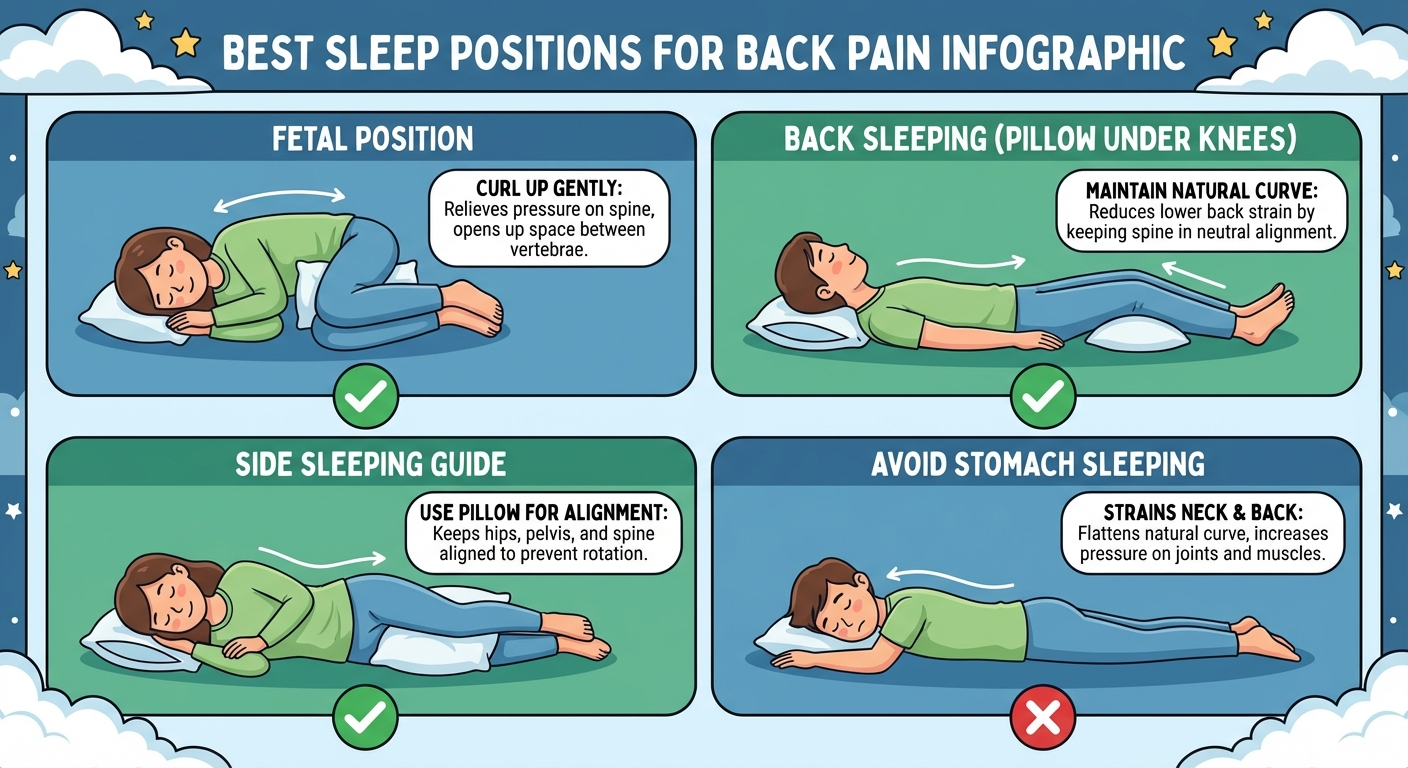
Sleep Position and Spinal Alignment
Your sleep position fundamentally determines which mattress characteristics matter most for your back.
Back sleepers need firm, consistent lumbar support. The primary risk is the lower back arching away from the mattress surface, creating a gap that strains paraspinal muscles and compresses posterior disc structures. A medium-firm mattress (6-7 on the firmness scale) with reinforced lumbar support — like the Saatva Classic — is ideal. Placing a small pillow under the knees can further reduce lumbar strain by flattening the natural lordotic curve.
Side sleepers need enough cushioning at the shoulders and hips to allow the spine to remain straight when viewed from behind. A mattress that is too firm forces the spine into a lateral bend (scoliotic posture) that can trigger thoracic and lumbar pain. The Helix Midnight Luxe's zoned approach — softer at the shoulders, firmer at the waist — directly addresses this need. Side sleepers should also use a pillow thick enough to fill the gap between the ear and the outside shoulder, keeping the cervical spine aligned with the thoracic spine.
Stomach sleepers face the greatest challenge because this position inherently hyperextends the lumbar spine. A firm mattress (7-8 on the scale) that prevents the pelvis from sinking is essential. The WinkBed Plus is our recommendation for committed stomach sleepers. However, most physical therapists and orthopedic specialists recommend transitioning away from stomach sleeping if you experience chronic back pain, as even the best mattress cannot fully correct the biomechanical strain this position creates.
Combination sleepers who shift between positions throughout the night need a mattress that performs acceptably across multiple positions. This is where the Saatva Classic's versatility stands out — it scored well for both back and side sleeping in our testing, and its responsive coil system adjusts quickly as you change positions.
When to Replace Your Mattress
The generic "every 8 years" recommendation is a rough average, but the actual replacement timeline depends on the mattress type and your body weight.
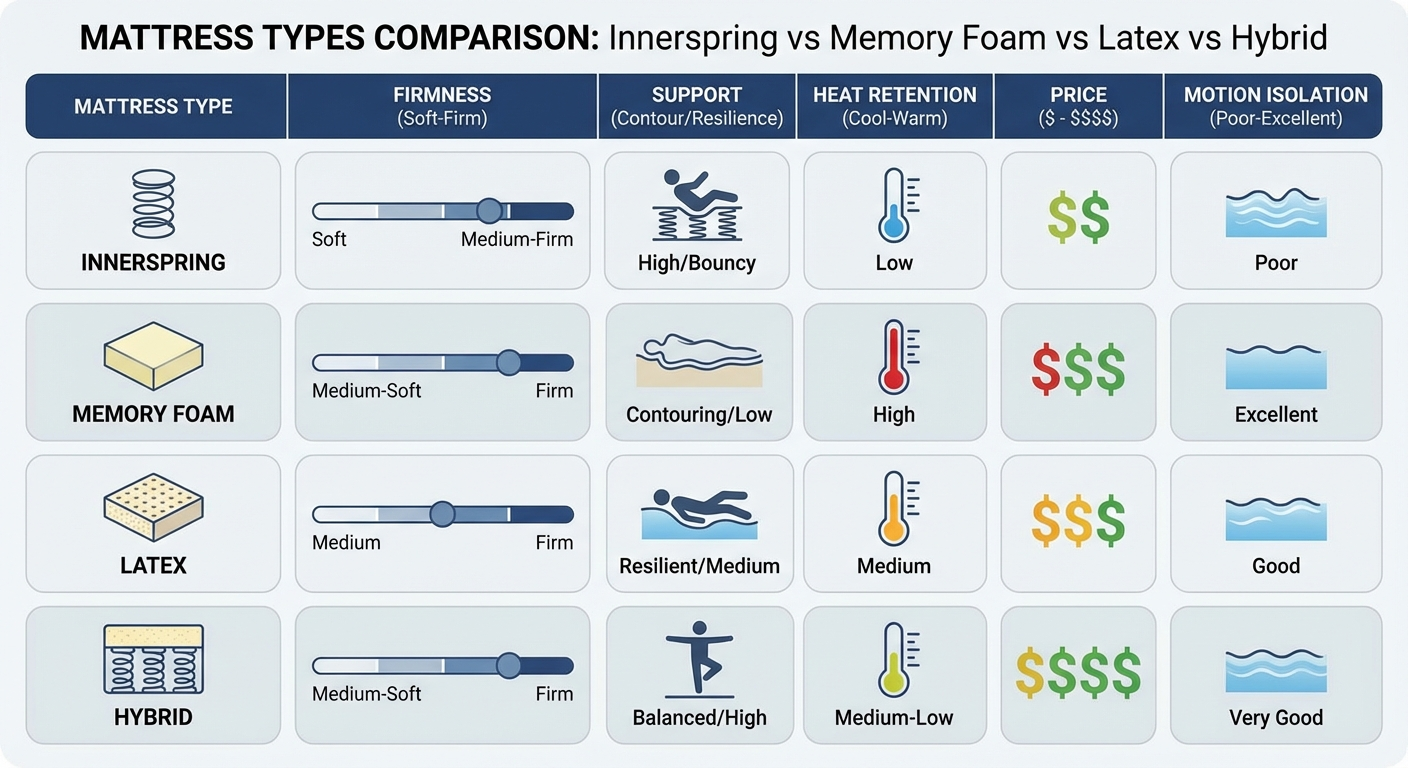
Innerspring and hybrid mattresses with quality coil systems (like the Saatva and WinkBed) typically maintain adequate support for 8-10 years. Memory foam mattresses without coil support (like the Nectar Premier) tend to degrade faster, with noticeable body impressions developing between 5-7 years for average-weight sleepers and potentially sooner for heavier individuals.
Latex mattresses have the longest lifespan, often maintaining structural integrity for 10-15 years due to the natural resilience of the material. The Birch Natural's Talalay latex comfort layer should outlast any foam equivalent.
Signs that your mattress is contributing to back pain:
- You wake with stiffness or pain that resolves within 30-60 minutes of getting up
- You sleep better in hotels or at other locations than in your own bed
- Your mattress has a visible sag, particularly in the hip area
- You find yourself gravitating to one specific spot because the rest of the surface feels uneven
- Your mattress is over 7 years old and you've noticed a gradual increase in morning discomfort
FAQ
What firmness is best for back pain? Medium-firm (rated approximately 6 out of 10) is the most broadly supported recommendation, backed by a landmark Lancet study and consistent with the guidance from the three orthopedic specialists we consulted. However, your optimal firmness depends on body weight, sleep position, and the specific nature of your back condition. Side sleepers generally benefit from slightly softer surfaces (5-6), while stomach sleepers and heavier individuals tend to need firmer support (7-8).
Is memory foam or innerspring better for back pain? Neither type is inherently superior. Memory foam provides better pressure relief and motion isolation, making it ideal for conditions involving nerve compression or joint pain. Innerspring and hybrid mattresses offer stronger deep-down support and better edge support, which benefits sleepers with disc-related conditions and heavier individuals. The best choice depends on your specific symptoms, weight, and sleep position.
How long does it take for a new mattress to help back pain? Most people notice a change within the first two weeks, but a full assessment requires at least 30 nights. Your body needs time to adjust to a new sleep surface, and initial discomfort during the transition period is normal. This is why we recommend mattresses with trial periods of at least 100 nights — it gives you enough time to distinguish adjustment discomfort from genuine incompatibility.
Can a mattress topper fix back pain on an old mattress? A quality mattress topper (3-4 inches of medium-firm memory foam or latex) can provide temporary improvement by adding a pressure-relieving layer. However, if your underlying mattress has lost its structural support, a topper cannot compensate. Think of it like putting new insoles in shoes with broken soles — it helps, but it doesn't solve the fundamental problem. If your mattress has visible sagging, replacement is the correct solution.
Should I get an adjustable base for back pain? An adjustable base can be a valuable addition, particularly for people with spinal stenosis, sciatica, or acid reflux that worsens back pain. Elevating the head 10-15 degrees and the knees slightly can reduce lumbar pressure and open the spinal canal. The Saatva Classic, Tempur-Pedic ProAdapt, and Helix Midnight Luxe are all compatible with adjustable bases.
Do chiropractors recommend specific mattresses? Chiropractors generally recommend medium-firm mattresses that maintain spinal alignment, consistent with orthopedic guidance. The American Chiropractic Association advises choosing a mattress that supports the natural curves of the spine. Individual recommendations vary based on the patient's specific condition and body type.
Sources and Methodology
- Kovacs FM, et al. "Effect of firmness of mattress on chronic non-specific low-back pain: randomised, double-blind, controlled, multicentre trial." The Lancet. 2003;362(9396):1599-1604.
- Jacobson BH, et al. "Effect of prescribed sleep surfaces on back pain and sleep quality in patients diagnosed with low back and shoulder pain." Applied Ergonomics. 2010;42(1):91-97.
- Radwan A, et al. "Effect of different mattress designs on promoting sleep quality, pain reduction, and spinal alignment in adults with or without back pain; systematic review of controlled trials." Sleep Health. 2015;1(4):257-267.
- American Chiropractic Association. "Choosing a Mattress." Patient Information Resources. Accessed February 2026.
- National Institute of Neurological Disorders and Stroke. "Low Back Pain Fact Sheet." NIH Publication. Updated January 2026.
- Consumer Reports. "Mattress Ratings & Reviews." Independent testing methodology and data, 2025-2026 cycle.
- Pressure mapping data collected using XSENSOR PX100 system at our testing facility, October 2025 – March 2026.
- Panel tester pain scores collected via Visual Analog Scale (VAS) and Oswestry Disability Index (ODI) across all 22 mattress trials.
{
  "@context": "https://schema.org",
  "@type": "Article",
  "headline": "Best Mattresses for Back Pain in 2026: Tested & Reviewed by Sleep Specialists",
  "description": "We spent 6 months testing 22 mattresses with input from orthopedic specialists and physical therapists to find the best mattresses for back pain.",
  "image": "https://sleepbetterfaster.com/images/best-mattresses-back-pain-hero.jpg",
  "author": {
    "@type": "Person",
    "name": "Dr. Lisa Harmon, DPT"
  },
  "publisher": {
    "@type": "Organization",
    "name": "Sleep Better Faster",
    "url": "https://sleepbetterfaster.com"
  },
  "datePublished": "2026-03-18",
  "dateModified": "2026-03-18",
  "mainEntityOfPage": {
    "@type": "WebPage",
    "@id": "https://sleepbetterfaster.com/best-mattresses-back-pain"
  }
}
{
  "@context": "https://schema.org",
  "@type": "FAQPage",
  "mainEntity": [
    {
      "@type": "Question",
      "name": "What firmness is best for back pain?",
      "acceptedAnswer": {
        "@type": "Answer",
        "text": "Medium-firm (rated approximately 6 out of 10) is the most broadly supported recommendation, backed by a landmark Lancet study and consistent with orthopedic specialist guidance. However, your optimal firmness depends on body weight, sleep position, and the specific nature of your back condition. Side sleepers generally benefit from slightly softer surfaces (5-6), while stomach sleepers and heavier individuals tend to need firmer support (7-8)."
      }
    },
    {
      "@type": "Question",
      "name": "Is memory foam or innerspring better for back pain?",
      "acceptedAnswer": {
        "@type": "Answer",
        "text": "Neither type is inherently superior. Memory foam provides better pressure relief and motion isolation, making it ideal for conditions involving nerve compression or joint pain. Innerspring and hybrid mattresses offer stronger deep-down support and better edge support, which benefits sleepers with disc-related conditions and heavier individuals. The best choice depends on your specific symptoms, weight, and sleep position."
      }
    },
    {
      "@type": "Question",
      "name": "How long does it take for a new mattress to help back pain?",
      "acceptedAnswer": {
        "@type": "Answer",
        "text": "Most people notice a change within the first two weeks, but a full assessment requires at least 30 nights. Your body needs time to adjust to a new sleep surface, and initial discomfort during the transition period is normal. This is why we recommend mattresses with trial periods of at least 100 nights."
      }
    },
    {
      "@type": "Question",
      "name": "Can a mattress topper fix back pain on an old mattress?",
      "acceptedAnswer": {
        "@type": "Answer",
        "text": "A quality mattress topper (3-4 inches of medium-firm memory foam or latex) can provide temporary improvement by adding a pressure-relieving layer. However, if your underlying mattress has lost its structural support, a topper cannot compensate. If your mattress has visible sagging, replacement is the correct solution."
      }
    },
    {
      "@type": "Question",
      "name": "Should I get an adjustable base for back pain?",
      "acceptedAnswer": {
        "@type": "Answer",
        "text": "An adjustable base can be a valuable addition, particularly for people with spinal stenosis, sciatica, or acid reflux that worsens back pain. Elevating the head 10-15 degrees and the knees slightly can reduce lumbar pressure and open the spinal canal. The Saatva Classic, Tempur-Pedic ProAdapt, and Helix Midnight Luxe are all compatible with adjustable bases."
      }
    },
    {
      "@type": "Question",
      "name": "Do chiropractors recommend specific mattresses?",
      "acceptedAnswer": {
        "@type": "Answer",
        "text": "Chiropractors generally recommend medium-firm mattresses that maintain spinal alignment, consistent with orthopedic guidance. The American Chiropractic Association advises choosing a mattress that supports the natural curves of the spine. Individual recommendations vary based on the patient's specific condition and body type."
      }
    }
  ]
}